
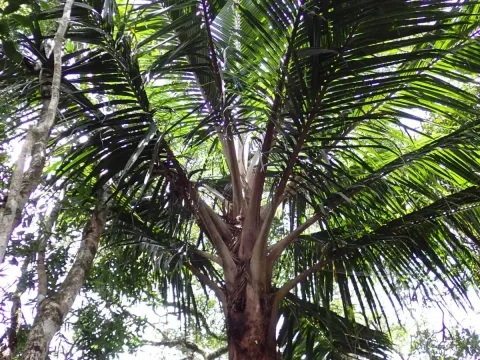
Ravenea
Ravenea C. D. Bouché
Ravenea is a genus of magnificent flowering plants in the Arecaceae family, native to Madagascar and the Comoro Islands. These palms are highly valued in interior design and landscaping for their elegant, feathery foliage and structural form.
What the section contains


Ravenea
The cultivation of Ravenea requires high ambient humidity and a consistent tropical environment. Optimal temperatures range between 20°C and 28°C throughout the year, with sensitivity to sudden cold drafts or prolonged chilling.
Light requirements are strict: the plant needs bright, indirect light to maintain its vigor. Excessive shade leads to etiolation and weak fronds, while direct, harsh sunlight often causes permanent leaf scorching.
A well-draining, nutrient-rich soil mix is crucial for successful growth. A blend containing peat, pine bark, and coarse perlite or sand creates the ideal environment for the root system, preventing waterlogging.
Proper irrigation management involves keeping the soil consistently moist but never waterlogged. Using lukewarm, filtered water helps prevent the accumulation of minerals in the soil, which can be detrimental to long-term health.
The primary threats to Ravenea include fungal root rot and physiological disorders resulting from poor water management. Over-saturation of the potting medium is the most common cause of premature plant decline.
Pest issues are predominantly caused by spider mites and scale insects. These pests thrive in dry indoor environments and target the underside of fronds and the base of the stalks, weakening the palm's immunity.
Integrated pest management is recommended, starting with maintaining high humidity levels to deter spider mite infestations. Regular cleaning of the leaves helps remove dust and early-stage pests.
In cases of severe infestation, systemic insecticides or horticultural oils may be required. Always test a small area of the foliage before applying any chemical treatment to ensure the plant's tolerance.
Ongoing monitoring of frond color is essential; yellowing or browning may signal nutritional deficiencies, specific pest activity, or the need for a change in the light exposure regime.