
Sabinaria magnifica
Sabinaria magnifica
Description
Growing requirements
Sabinaria magnifica is a unique palm species belonging to the Arecaceae family. First discovered in 2013, it is endemic to the tropical rainforests of Colombia, specifically within the Atrato River basin.
The plant thrives in tropical environments characterized by high humidity and consistent rainfall. In its natural habitat, it grows in lowland forests where the soil is rich in organic matter and maintains constant moisture.
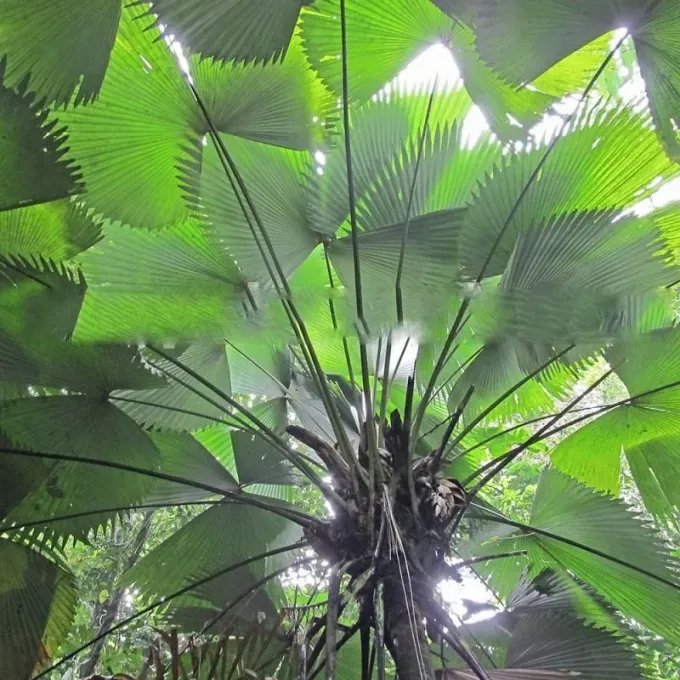
Botanically, this species is distinguished by its impressive, large leaves that can reach several meters in length. The trunk often remains obscured by dense foliage, giving the plant a compact and highly ornamental appearance.
Successful cultivation requires maintaining temperatures between 20-25 degrees Celsius and protection from direct sunlight. The culture is extremely sensitive to substrate drying and demands well-drained but constantly moist soils.
Currently, the economic use of this species is limited to ornamental gardening and specialized botanical research. Given its rarity, the plant holds significant value for collectors and global botanical institutions.
Main diseases and pests
The primary threat to Sabinaria magnifica populations is the destruction of its natural habitat due to deforestation and land-use changes in the Chocó region of Colombia.
In greenhouse or indoor conditions, the crop can be affected by common palm pests such as spider mites and scale insects, which proliferate quickly when humidity levels are inadequate.
Overwatering, combined with poor drainage, frequently leads to root rot. These pathogens represent the main cause of seedling mortality when cultivation techniques are not strictly followed.
Micronutrient deficiencies, particularly of iron and magnesium, manifest as leaf chlorosis. Regular application of specialized slow-release palm fertilizers is essential for maintaining plant health.
Fungal infections can affect foliage if air circulation is poor. Maintaining adequate ventilation and proper spacing between plants is critical to reducing disease pressure in cultivated environments.