
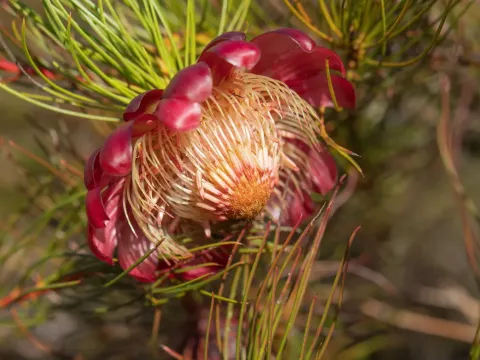
Protea pityphylla
Protea pityphylla
Seeds of Protea pityphylla are best sown during late summer or early autumn, mirroring the natural seasonal shift that triggers germination in their native African habitat.
What the section contains
Protea pityphylla
It is essential to use a highly porous and well-draining sowing mix, typically consisting of coarse river sand and peat, to ensure root respiration and prevent rot.
The seeds should be sown at a depth of about 1 to 1.5 centimeters, ensuring they are kept consistently moist but never waterlogged during the critical germination phase.
Treating seeds with liquid smoke or smoke-infused water is a common agricultural practice to improve germination rates, as the plant has evolved to sprout after fires.
Good ventilation is vital for young seedlings, as they are susceptible to damping-off diseases caused by stagnation of air and excessive soil moisture levels.
Protea pityphylla is a distinct member of the Proteaceae family, native to the rugged mountainous regions of the Cape Floristic Region, known for its extreme adaptability.
The plant requires full sun exposure throughout the day; even partial shade can lead to leggy, weak growth and a significant reduction in the quality of the inflorescences.
Soil chemistry is of paramount importance; this plant thrives in acidic, nutrient-poor soils and is highly intolerant to phosphorus, which can cause severe nutritional stress.
A well-structured drainage system is mandatory for cultivation, as stagnant moisture around the sensitive root system is the fastest way to cause plant mortality.
While the species prefers a Mediterranean-style climate with dry summers and mild, moist winters, it is remarkably resilient once established in a suitable garden setting.
Root rot is the most serious threat to Protea pityphylla, often caused by heavy clay soils, overwatering, or the use of commercial fertilizers that are too potent for the roots.
Fungal pathogens such as Phytophthora can quickly destroy a healthy specimen, appearing as sudden wilting or darkening of stems, especially in high-humidity conditions.
Insect pests including mealybugs and scale insects may infest the foliage, requiring manual removal or the application of specialized horticultural oils for effective control.
Spider mites can become a problematic issue in greenhouse environments where airflow is insufficient and temperatures remain consistently high throughout the season.
Effective pest management relies on preventative measures such as removing infected parts promptly and ensuring that all environmental parameters are strictly met.