
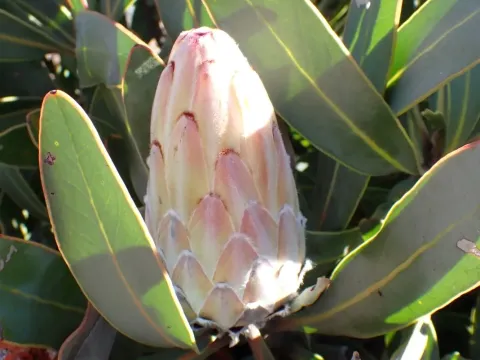
Protea lorifolia
Protea lorifolia
Propagation of Protea lorifolia in commercial conditions is most often carried out by seeds or by stem cuttings. Seeds are sown in autumn or early spring, providing them with conditions simulating natural germination, including fluctuations between night and day temperatures.
What the section contains
Protea lorifolia
For successful seed germination, it is recommended to use a sterile substrate with low nutrient content, which prevents the development of fungal infections in the early stages.
For vegetative propagation, semi-hardwood cuttings are used, which are cut from mother plants during their dormant period. A key factor is the use of phytohormones to accelerate root development.
Prepared cuttings are planted in a perlite-peat mixture, maintaining high air humidity and moderate temperature, which promotes the development of a strong root system.
The optimal time for planting seedlings in the ground is after the last frosts have passed, when the soil is sufficiently warmed for active plant growth.
Protea lorifolia is endemic to South Africa and requires specific conditions, as close as possible to the Mediterranean climate. The plant prefers sunny, well-ventilated areas.
Soil requirements are strict: they must be acidic (pH 5.0–6.0), have excellent drainage, and have a low phosphorus content, as proteas are extremely sensitive to its excess.
Irrigation should be moderate; the culture tolerates short-term drought better than stagnant moisture in the root zone, which inevitably leads to the development of root rots.
In protected ground conditions, it is necessary to maintain an optimal level of air humidity and ensure intensive ventilation to avoid overheating and excess humidity.
The plant does not tolerate sub-zero temperatures, so in regions with a temperate climate, cultivation is only possible in greenhouses or winter gardens.
Commercial cultivation of protea is focused on obtaining high-quality cut flower material. The productivity of a single bush depends on the age of the plant, varietal characteristics, and nutrition conditions.
At the peak of vegetation, an adult bush can produce from 10 to 30 quality flower heads per season. Flower stalks must be strong and have the characteristic color and bud density for the species.
To increase the yield of marketable products, regular formative pruning is applied, which stimulates the development of new flower-bearing shoots from dormant buds.
Harvesting is carried out when the outer bracts begin to open, revealing the central part of the inflorescence, which guarantees the long-term preservation of the cut flowers.
The overall profitability of the crop is high if the technology is followed, as the exotic inflorescences of the protea are in stable demand in the floral segment.
The main threat to Protea lorifolia is fungal diseases of the root system caused by pathogens of the genus Phytophthora, which develop with excessive watering.
The leaves of the plant can be affected by powdery mildew in conditions of stagnant air, so preventive treatment with fungicides and regular ventilation are mandatory.
Among the pests, scale insects and mealybugs are most often found on crops, as they suck juices from young shoots, weakening the plant's immunity.
Damage by mites is also possible in low humidity conditions in greenhouses, requiring the use of specialized acaricides.
- Regular monitoring of the root collar status.
- Use of high-quality planting material.
- Control of substrate pH levels.
- Timely sanitary pruning of affected parts.
Harvesting protea is a labor-intensive process that requires careful handling of each flower stalk to avoid damaging the structure of the bracts.
The inflorescences are cut with a sharp pruner, leaving a sufficient part of the stem with leaves for further plant recovery.
After cutting, the flowers are immediately placed in water, preferably with the addition of preservatives that prevent the development of bacteria in the stem vessels.
Sorting is performed by stem length, size, and the degree of opening of the inflorescence head, after which the products are packed for transport in refrigerated chambers.
The correct temperature regime during storage (about 5–8 degrees Celsius) allows extending the life of cut flowers up to several weeks.