
Protea mundii
Protea mundii
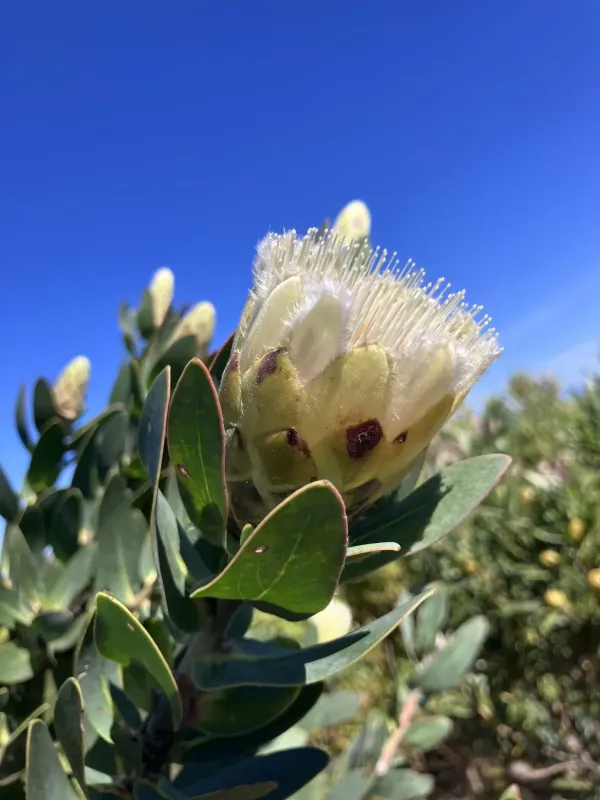
Description
Sowing dates
Propagation of Protea mundii is primarily achieved through seeds or stem cuttings. Seed sowing should take place in late summer to allow seedlings to establish before the peak of the growing season.
Seeds require a well-drained, acidic soil mix, typically consisting of coarse sand and peat. Smoke treatment or specialized scarification is often necessary to mimic the natural fire-stimulated germination found in South African habitats.
Germination is often sporadic and slow, necessitating a stable environment with consistent moisture but high aeration. Once the first true leaves emerge, seedlings should be moved to individual containers.
Cuttings should be taken from semi-hardwood growth. Dipping the cuttings in a rooting hormone and placing them in a well-ventilated propagation bench with bottom heat significantly improves success rates.
Young plants are sensitive to root disturbance, so careful handling during transplanting is essential to avoid shock and root rot, which are common killers of young proteas.
Growing requirements
Protea mundii, a member of the Proteaceae family, is native to mountainous regions and requires cool, well-drained conditions. It thrives in soils that are low in nutrients, especially phosphorus.
Standard commercial fertilizers are often harmful to this species. Phosphorus toxicity is a major risk, as it inhibits the plant's ability to take up essential micronutrients, leading to rapid decline.
The plant requires full sun to produce vibrant blooms. Proper airflow is vital to prevent fungal pathogens from establishing on the foliage, particularly in humid climates.
Irrigation must be managed with precision. The soil should be allowed to dry out between waterings to prevent the development of root-borne fungi, which are the primary limiting factor in cultivation.
Soil pH should be maintained in the acidic range. Water quality is also critical, as high salt or chlorine content can cause leaf burn and stunted growth over time.
Main diseases and pests
The most significant threat to Protea mundii is Phytophthora root rot, which thrives in poorly drained, waterlogged soil conditions. Once established, it is extremely difficult to treat.
Pests like mealybugs and spider mites are common in greenhouse environments. These pests thrive in stagnant air, making consistent ventilation the best preventative measure.
Nutritional imbalances, often caused by the application of inappropriate fertilizers, mimic disease symptoms. Always analyze the soil before applying any soil amendments.
Regular sanitation of pruning tools is non-negotiable. Using alcohol or bleach solutions between plants helps stop the spread of potential pathogens across the crop.
Monitoring programs should be implemented to track the health of the root system, as above-ground symptoms often appear only after the root system is already severely compromised.
Harvesting
Protea mundii is grown primarily for the cut flower industry. Harvesting occurs when the bracts are fully open and the inflorescence has reached its desired structural maturity.
Flowers should be harvested in the early morning to ensure maximum turgor pressure. Using sharp, sanitized shears reduces the risk of infection at the cut site.
Post-harvest treatment involves placing stems in clean water with floral preservatives to inhibit bacterial growth. Proper temperature control during shipping is key to long shelf life.
Pruning during the harvest process is beneficial for the plant's long-term health, as it encourages dense, productive branching for the following season's blooms.
Quality grading standards prioritize stem straightness, the absence of leaf necrosis, and the aesthetic perfection of the bracts, ensuring a premium product for the international floral market.