
Protea speciosa
Protea speciosa
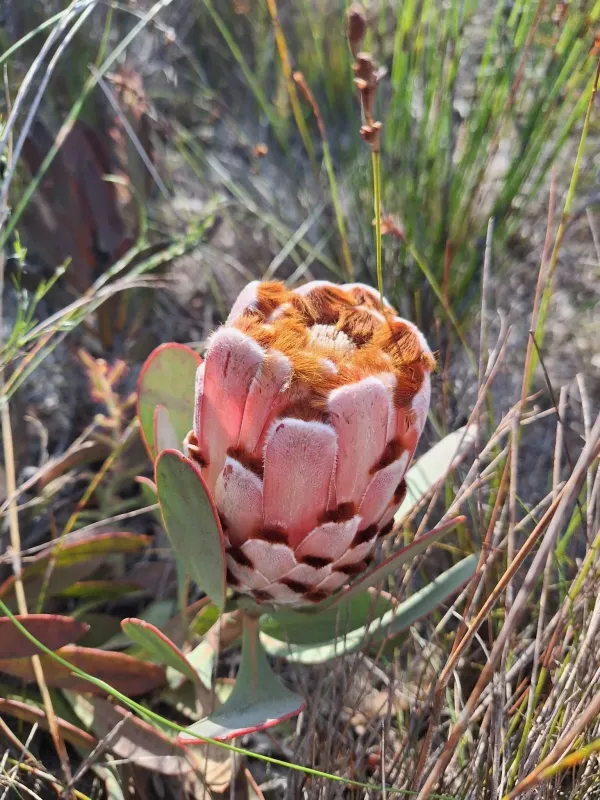
Description
Sowing dates
Propagation of Protea speciosa in commercial settings is primarily achieved through seeds or cuttings. Seeds are sown during autumn and winter, requiring stratification to ensure uniform germination.
The growing medium must be extremely nutrient-poor, specifically low in phosphorus, as the proteoid root system is highly sensitive to standard chemical fertilizers.
Optimal germination temperature ranges from 15 to 20 degrees Celsius, requiring a stable supply of fresh air to prevent the development of fungal pathogens.
Cuttings are used to obtain genetically identical plant material, which is essential for commercial floriculture, typically utilizing semi-hardwood shoots during summer.
Young plants require careful handling during transplantation to minimize damage to the sensitive proteoid roots, which are vital for efficient nutrient and water uptake.
Growing requirements
Protea speciosa, a member of the Proteaceae family, originates from South Africa and thrives in a Mediterranean climate characterized by dry summers and mild winters.
The plant requires full sun exposure and excellent ventilation; therefore, in controlled greenhouse environments, maximizing light duration is critical for development.
Soil must be acidic (pH 5.0–6.0), sandy, and possess superior drainage, as even slight waterlogging can lead to fatal root rot within a very short period.
The species is highly frost-intolerant, making it suitable for cultivation in temperate regions only within specialized greenhouses or climate-controlled facilities.
Irrigation should be regular but moderate. The use of hard or chlorinated water is strictly avoided, as it adversely affects soil acidity and root health.
Yield
Protea speciosa is a premium cut flower, highly valued in international floristry for its durability and unique ornamental appearance in arrangements.
In commercial plantations, yield depends on plant maturity and spacing: optimal density allows for the production of 10 to 20 flower heads per plant per season.
The flowering period is variable, but with proper agronomic management, peak production occurs in spring and early summer when market demand is highest.
Moderate pruning of flowered stems is recommended to stimulate the formation of new inflorescences and maintain the structural integrity of the bush.
Harvesting is performed when the buds are partially open, ensuring maximum post-harvest longevity and aesthetic appeal for the end consumer.
Main diseases and pests
The primary threats to Protea speciosa are soil-borne pathogens, particularly Phytophthora species, which thrive under conditions of poor drainage and waterlogging.
Common pests include mealybugs and spider mites, which can proliferate rapidly in the dry and warm microclimate of a greenhouse environment.
Disease prevention relies on strict phytosanitary protocols, including regular sterilization of tools and the use of certified disease-free propagation material.
If pest infestation occurs, immediate intervention using biological control agents or specific systemic insecticides is required to prevent widespread damage.
Maintaining the purity of irrigation water is essential to prevent the spread of pathogens that target the vascular system of the plants.
Harvesting
Harvesting Protea speciosa requires precision, as the flower heads are structurally rigid and susceptible to mechanical damage if handled incorrectly.
Freshly cut stems are immediately placed in clean water supplemented with specific post-harvest preservatives to extend vase life.
Transportation is carried out in refrigerated containers at temperatures between 5 and 8 degrees Celsius to slow down transpiration and metabolic processes.
It is vital to avoid moisture accumulation on the flower heads during packaging to prevent the growth of gray mold during storage and transit.
Grading is based on stem length and bud opening stage, which determines the market value of each unit in accordance with international trade standards.