
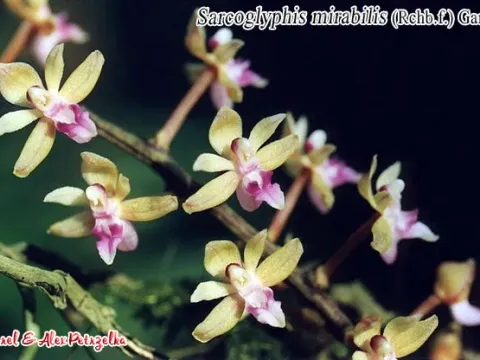
Sarcoglyphis
Sarcoglyphis
The genus Sarcoglyphis represents a group of miniature epiphytic orchids belonging to the Orchidaceae family. These plants are native to the tropical forests of Southeast Asia, where they thrive in high-humidity canopy environments.
What the section contains


Sarcoglyphis
Botanically, these orchids are defined by their sympodial growth habit, featuring distinct, leathery leaves and a complex root system adapted for nutrient absorption from moisture and debris collected on tree bark. They do not naturally grow in soil, which is a key factor to replicate in home cultivation.
Climate requirements for Sarcoglyphis involve maintaining high ambient humidity levels, ideally above 75%, and temperatures ranging from 20°C to 28°C throughout the year. They are sensitive to extreme fluctuations and perform best when the microclimate is kept relatively stable.
Light requirements are characterized by bright, filtered light. Direct tropical sun is detrimental to these plants, leading to scorching of the leaves and premature moisture loss from the succulent structures of the orchid.
Proper agronomic care involves mounting the plants on organic material such as cork bark or driftwood. This setup mimics their natural life cycle on trees and ensures that roots receive enough airflow to prevent the buildup of anaerobic bacteria.
Pest management is crucial, with spider mites and mealybugs being the most common threats to Sarcoglyphis. These pests can cause significant damage to the leaf axils, leading to severe stress for the orchid and potential secondary fungal infections.
Fungal diseases are a major concern, particularly root rot caused by overwatering or poor drainage. Using high-quality, well-draining media is the most effective preventative measure against these systemic pathogens.
Regular sanitation of the growing environment is necessary to prevent the spread of bacterial soft rot, which can destroy an entire specimen within days. Removing any decaying material from the mount is a fundamental part of routine maintenance.
Pesticide and fungicide applications should be performed with caution. Since these orchids are sensitive to certain chemical formulations, it is recommended to dilute products more than the standard instruction suggests for more resilient houseplants.
Monitoring for health issues should be a frequent task. Any sudden change in leaf color or texture indicates a shift in plant health, often linked to either light intensity issues or the initial stage of root system degradation due to inappropriate watering.