
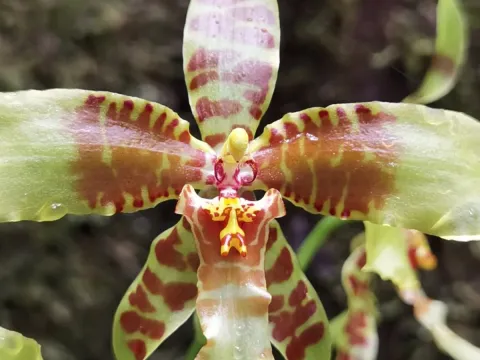
Rossioglossum
Rossioglossum
Rossioglossum is a genus of epiphytic plants belonging to the Orchidaceae family. Native to the high-altitude forests of Central America, primarily Mexico and Guatemala, these orchids have adapted to cool, misty conditions, making them a specialized crop for controlled environments.
What the section contains

Rossioglossum
Botanically, these plants are characterized by flattened, clustered pseudobulbs that support thick, leathery foliage. Their most prominent feature is the large, ornate flowers, often displaying vibrant yellow and brown patterns that are highly valued in both amateur and commercial orchidology.
The climatic requirements for Rossioglossum are stringent, demanding cool to intermediate temperatures. Ideally, these plants thrive in conditions where daytime temperatures remain moderate and nighttime drops are significant, which is essential to initiate the flowering process.
Regarding soil and substrate, they require a very loose, well-draining medium. A typical mixture consists of medium-grade pine bark, perlite, and charcoal to prevent waterlogging. Good aeration is vital, as the root systems of these epiphytes are prone to rot if kept in dense, suffocating materials.
Agricultural management involves a distinct watering cycle. During the growing season, consistent moisture is necessary, but during the rest period—triggered by the maturation of pseudobulbs—watering must be significantly reduced to allow the plant to recover and initiate new growth cycles.
The primary pests affecting Rossioglossum include spider mites and scale insects, which flourish in dry, poorly ventilated conditions. Monitoring the undersides of leaves and the junction of pseudobulbs is essential for detecting early infestations and applying appropriate horticultural oils or soaps.
Diseases such as black rot (Phytophthora or Pythium) pose a severe threat, especially when hygiene standards are low or humidity is excessive. Maintaining proper air circulation, sanitizing tools, and avoiding water accumulation in the crown are the most effective strategies for preventing lethal fungal infections.