
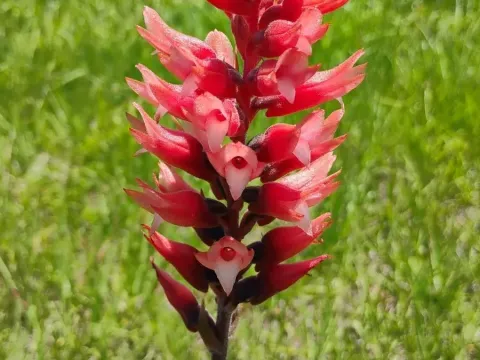
Sacoila
Sacoila
Sacoila is a genus of terrestrial orchids belonging to the Orchidaceae family. These plants are known for their unique adaptation to specific tropical and subtropical environments across the Americas, primarily found in grasslands and open woodlands.
What the section contains

Sacoila
The geographic range of Sacoila includes regions from the southern United States through the Caribbean and down to South America. These orchids are well-adapted to habitats that experience distinct wet and dry seasons, which dictate their growth cycles and dormancy periods.
Botanically, Sacoila is distinguished by its fleshy, tuberous roots which act as storage organs for water and essential nutrients. The plants develop a basal rosette of leaves and produce terminal racemes featuring numerous flowers that display complex reproductive structures typical of orchids.
Cultivation requirements for Sacoila are demanding, focusing on precise light levels and well-draining, airy growing media. The substrate must mimic the natural soil conditions of their native habitat, typically requiring a mix that prevents root suffocation while maintaining necessary moisture.
In terms of agricultural or economic use, Sacoila is not a crop plant. Its primary value lies in its presence within botanical gardens, specialized orchid collections, and its role in ecological research focused on the conservation of tropical flora.
The primary threats to Sacoila in cultivation are fungal and bacterial infections, often stemming from over-watering or poor greenhouse ventilation. Root rot is the most common cause of plant failure, particularly when the root system is kept in waterlogged substrate for too long.
Common pests include aphids, mealybugs, and spider mites. These pests thrive in indoor conditions, attacking the soft tissues of the leaves and flowering spikes, which can significantly damage the plant's vitality and floral display.
Environmental stress, such as extreme temperature fluctuations or inconsistent humidity, can weaken Sacoila, making it more susceptible to secondary infections. Maintaining a stable environment is essential for the long-term survival and health of these sensitive plants.
Integrated pest management (IPM) practices, including regular inspection and the use of soft contact insecticides, are recommended for controlling pest populations. Prevention is always preferred over chemical treatment, as these orchids are sensitive to harsh pesticides.
As a non-traditional crop, there are few standardized agricultural protocols for protecting Sacoila. Growers must rely on general orchid husbandry expertise, focusing on hygiene, proper substrate composition, and strict control of environmental variables to mitigate health risks.