
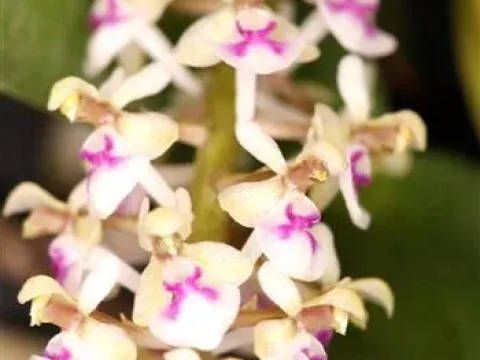
Saccolabiopsis
Saccolabiopsis
Saccolabiopsis belongs to the Orchidaceae family. This is a genus of miniature epiphytic orchids that naturally grow in the tropical forests of Southeast Asia, including India, Indonesia, and the Philippines.
What the section contains

Saccolabiopsis
These plants prefer conditions with high air humidity characteristic of tropical climates. The optimal temperature range for the culture's development varies from 20 to 28 degrees Celsius, with a necessary drop in night temperatures to stimulate metabolic processes.
In cultivation, these plants require a specific substrate consisting of fine-grade pine bark, sphagnum moss, and charcoal. The medium must provide excellent drainage, as the roots are extremely sensitive to stagnant moisture and require good aeration.
Saccolabiopsis requires bright but indirect light. Direct sunlight can cause burns on the delicate leaves, so growing them on east or west-facing windows or using grow lights during the winter period is recommended.
Cultivation practices include regular misting and moderate watering with soft, settled water. During the vegetative period, the plant responds positively to the application of specialized orchid fertilizers in weak concentrations, which promotes healthy growth.
The main threat to Saccolabiopsis is fungal infections caused by overwatering and poor ventilation. Various types of root system rot can quickly lead to the death of the epiphyte if the humidity regime is violated.
Among pests, spider mites and scale insects pose the greatest threat, as they feed on the juices of the plant's delicate leaves. Upon detecting the first signs of infestation, treatment with insecticides or acaricides is necessary.
Mealybugs often hide in the leaf axils, which complicates early detection. Regular weekly inspection of collection specimens is recommended for the timely containment of infestation hotspots.
Bacterial leaf spotting can develop during sudden temperature fluctuations combined with high humidity. Prevention consists of maintaining hygiene in cultivation and ensuring a stable microclimate.
Using poor-quality substrate can lead to alkalinity or salinization, which weakens the plant's immune system. To prevent these issues, annual replacement of part of the potting medium or complete repotting is necessary.