
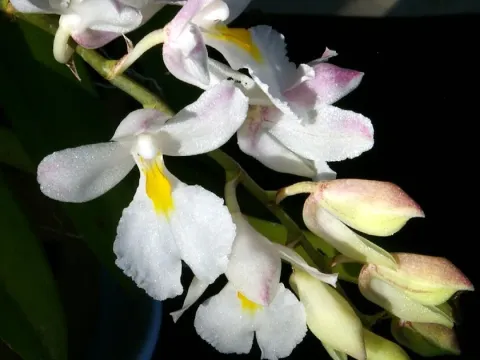
Rodriguezia
Rodriguezia
Rodriguezia is a genus of epiphytic plants belonging to the Orchidaceae family. These plants are native to the tropical forests of Central and South America, where they thrive in high-humidity environments anchored on tree branches.
What the section contains


Rodriguezia
Successful cultivation requires maintaining daytime temperatures between 20 and 25 degrees Celsius. A slight temperature drop at night is essential to mimic the plant's natural habitat and stimulate healthy flowering cycles.
The potting medium must be porous and well-draining, typically consisting of pine bark, sphagnum moss, and charcoal. Because these orchids are epiphytes, their roots require significant airflow to prevent rot and suffocation.
Watering should be balanced, allowing the medium to partially dry out before the next application. It is vital to use soft, room-temperature water and avoid letting water sit in the leaf axils, which can cause crown rot.
Lighting should be bright but indirect. Direct sunlight can easily scorch the delicate foliage of the Rodriguezia, while insufficient light may result in weak, spindly growth and a lack of flower production throughout the year.
The primary pests affecting Rodriguezia are spider mites, scale insects, and mealybugs. These pests frequently settle on the undersides of leaves or near the base of the pseudobulbs, draining vital sap from the plant.
Root rot is the most common disease encountered by growers, typically triggered by overwatering or using an overly decomposed potting mix that holds too much moisture and limits oxygen availability to the roots.
Fungal infections such as black rot or leaf spot can occur if the humidity levels are too high without adequate ventilation. Proper airflow is the most effective preventative measure against these pathogenic organisms.
To control infestations, gardeners should use horticultural oils or systemic insecticides specifically approved for delicate orchids. Always test treatments on a small portion of the plant to check for sensitivity.
Good hygiene practices, such as removing dead foliage and cleaning pots regularly, significantly reduce the risk of disease outbreaks. Healthy plants with strong root systems are naturally more resistant to both pests and fungal pathogens.