
Saccolabiopsis armitii
Saccolabiopsis armitii
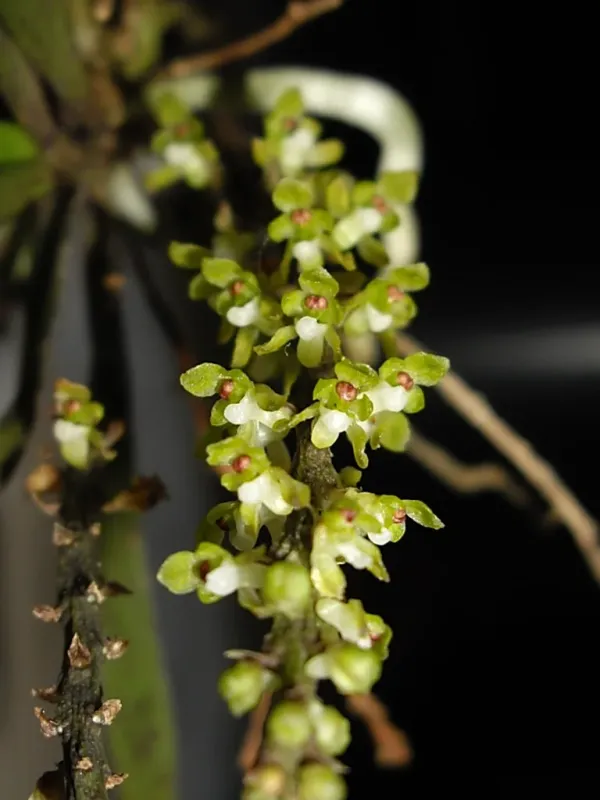
Description
Growing requirements
Saccolabiopsis armitii is a miniature epiphytic orchid belonging to the diverse Orchidaceae family. It is native to the tropical regions of Southeast Asia and Oceania, specifically found in lush forest environments where it thrives on tree bark, utilizing the humid tropical climate to sustain its growth.
Botanically, the species is characterized by its compact habit, featuring short stems and narrow, rosette-forming leaves. Its root system is specifically adapted for an epiphytic lifestyle, featuring velamen that efficiently absorbs moisture and nutrients directly from the surrounding humid air.
Cultivation of this plant requires high environmental humidity, generally maintained between 70% and 85%. Given its origins, constant air movement is crucial to prevent the accumulation of stagnant moisture, which is vital for the long-term health of the delicate root structure.
The preferred temperature range for healthy development is moderate to warm, with temperatures between 22-26 degrees Celsius during the day. Nighttime cooling is beneficial, as it mirrors the natural fluctuations of its native habitat and supports metabolic stability.
As an epiphyte, the plant must be grown on specialized substrates like pine bark or mounted on cork plaques. Substrate aeration is a key requirement, as the roots require significant access to oxygen to avoid asphyxiation and subsequent pathogen outbreaks.
Main diseases and pests
The primary threats to Saccolabiopsis armitii include fungal infections triggered by excessive moisture and poor ventilation. Rotting of the crown and root system is a common issue when water collects in the leaf axils, leading to rapid tissue decay if not addressed immediately.
Pests such as spider mites and mealybugs represent the most significant animal threats. These pests thrive in dry or poorly managed environments, weakening the plant by extracting sap from its foliage and causing stunted growth or total decline of the individual.
Scale insects can also pose a risk, attaching themselves to leaves and stems, which can be difficult to manage without thorough manual inspection. Vigilance and early intervention are essential to preventing severe infestations that would otherwise necessitate chemical treatment.
To mitigate the risk of disease, it is critical to use clean, pathogen-free water for irrigation and ensure that all mounting materials are sterilized before use. Chemical pesticides should be used with extreme caution to avoid damaging the orchid's sensitive tissues.
Ultimately, a successful management strategy relies on strict adherence to environmental parameters. By monitoring humidity, light exposure, and air circulation, growers can effectively protect this orchid from common threats and ensure sustained biological productivity.