
Hexalectris
Hexalectris
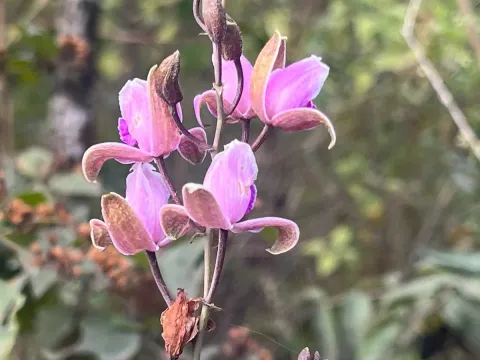
Hexalectris is a genus of mycoheterotrophic orchids that lack chlorophyll and rely entirely on mycorrhizal fungi for their nutritional requirements.
What the section contains


Hexalectris
These plants are not cultivated commercially, as they possess highly specific ecological dependencies that make them impossible to sustain in standard agricultural systems.
They are primarily native to the southern and central United States and parts of Mexico, where they thrive in undisturbed forest environments.
The botanical structure consists of flowering stalks emerging from underground rhizomes, characterized by an absence of leaves or photosynthetic tissue.
Their survival is strictly dictated by the presence of specific soil fungi, which act as the essential link between the forest ecosystem and the orchid's metabolism.
The primary threat to Hexalectris populations is the destruction and fragmentation of their natural woodland habitats due to urban and agricultural development.
Changes in soil composition, specifically the loss of organic matter and essential fungal networks, significantly impact the survival of these orchids.
While not subject to typical agricultural pests, they are highly sensitive to disturbances in the soil layer, which can disrupt their delicate mycorrhizal association.
Climate-induced variations in rainfall and humidity affect the health of the fungi, which in turn leads to the reproductive failure of the orchids.
Illegal poaching and unauthorized harvesting of these rare specimens significantly endanger the few remaining natural populations in the wild.