
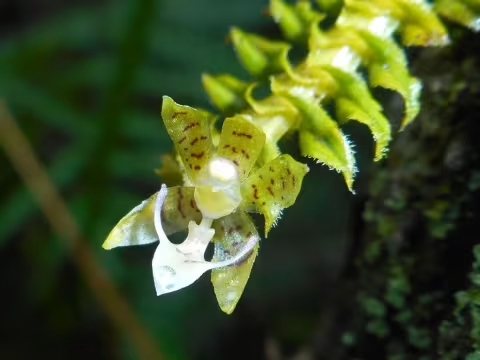
Dichaea
Dichaea
Dichaea is a genus of epiphytic orchids in the Orchidaceae family, native to tropical regions of the Americas and the Caribbean. These plants are known for their distinct fan-shaped foliage and long, creeping or pendant stems that attach to tree trunks in dense rainforest canopies.
What the section contains


Dichaea
Botany-wise, these orchids lack traditional pseudobulbs, relying instead on their thin, layered leaves to store water and nutrients. Their roots are velamen-covered, allowing for rapid absorption of atmospheric moisture and mineral deposits washed down by rainfall.
Cultivation requires a microclimate that mimics their natural habitat, specifically high relative humidity levels often exceeding 75%. Temperatures should be kept stable, typically in the intermediate to cool range, depending on the specific species' altitude origin.
For the growth medium, a mixture of fine fir bark, perlite, and live sphagnum moss is recommended to ensure both moisture retention and essential air circulation. Mounting on bark slabs is a common and highly effective method for those able to maintain high daily humidity.
Lighting should be diffuse and soft; harsh direct sunlight can easily damage the delicate leaf structure. If grown indoors, moderate light levels from a south-facing window with a sheer curtain or specialized LED grow lights provide optimal photosynthetic energy.
Spider mites are the most persistent pests for Dichaea, especially when the ambient humidity is insufficient. These pests thrive in dry air, spinning webs and damaging the leaf surface by sucking plant sap.
Fungal rots, including black rot and petal blight, are common threats caused by poor air movement and excessive water sitting on the leaves. These infections can lead to rapid decay if not addressed with immediate removal of affected tissue.
Mealybugs can hide deep within the leaf axils of the dense stems, making them difficult to detect until an infestation becomes severe. Regular cleaning with diluted isopropyl alcohol or neem oil can help keep populations under control.
Root rot is often the result of using a degraded substrate that has lost its porosity. It is essential to repot the plant every 12 to 18 months to provide fresh, airy material for the root system to colonize.
To prevent disease outbreaks, avoid overhead watering. If water is accidentally trapped in the center of the plant or leaf junctions, it should be carefully dried to prevent bacterial colonization.