
Dichaea latifolia
Dichaea latifolia
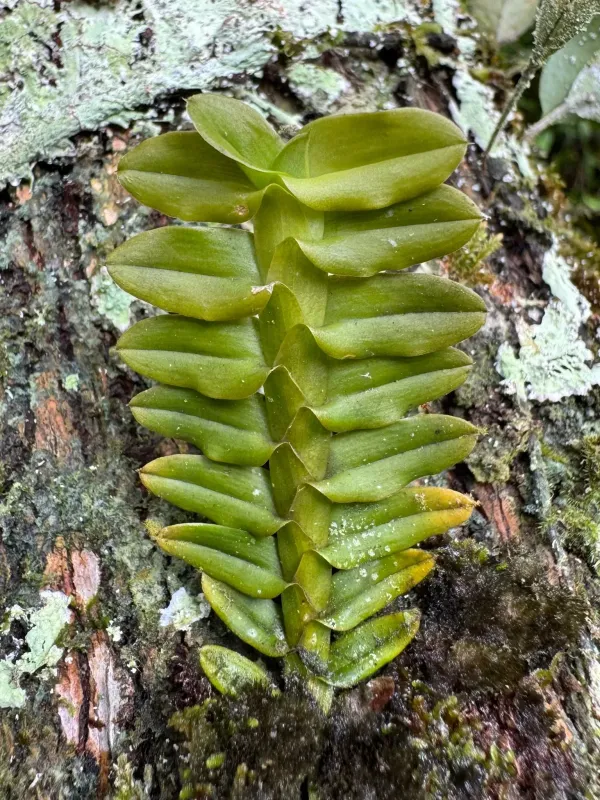
Description
Growing requirements
Dichaea latifolia is an epiphytic species belonging to the Orchidaceae family. Naturally occurring in the tropical rainforests of Central and South America, this plant is well-adapted to high-humidity, shaded environments found in high-altitude forests.
Botanically, it is characterized by a fan-like growth habit with dense, distichous leaves. Unlike many sympodial orchids, it lacks pseudobulbs, which makes it particularly sensitive to environmental stress and requires consistent access to moisture to thrive.
Cultivation requires a stable temperature range between 18°C and 24°C, along with humidity levels typically exceeding 70%. Proper air circulation is essential to prevent the accumulation of stagnant moisture which can lead to rapid fungal decay of the foliage.
The planting medium must be highly porous to ensure rapid drainage. A mixture of fine bark, charcoal, and sphagnum moss is recommended to facilitate root aeration. Repotting should be performed once the substrate begins to decompose to avoid compaction.
Light requirements for this species involve filtered, low-intensity light. Intense direct sunlight will quickly cause leaf tissue damage, manifesting as yellowing or necrotic spots. Northern or shaded eastern exposure is ideal for maintaining the lush green color of the foliage.
Main diseases and pests
Spider mites are a common threat, particularly in dry indoor environments. These pests thrive in low humidity and can cause significant damage to the leaf structure if not managed with regular misting or appropriate acaricides.
Mealybugs are another prevalent pest that tends to hide in the tight leaf axils of the plant. Early detection and manual removal, followed by systemic treatment, are necessary to prevent these insects from weakening the plant's structural integrity.
Fungal infections frequently occur when the plant is kept too wet with inadequate airflow. These diseases often appear as dark, spreading blotches on the leaves, requiring immediate removal of infected tissues and the application of fungicides.
Root rot is often the result of poor drainage or watering the plant in lower light conditions when evaporation is slow. Maintaining a strict watering schedule that allows the roots to dry slightly between waterings is crucial for long-term health.
Bacterial soft rot can occur under conditions of excessive heat and humidity. This disease progresses rapidly, turning the healthy tissue into mushy, discolored areas. Ensuring high standards of sanitation in the growing space is the best preventative measure against this threat.