
Dichaea hystricina
Dichaea hystricina
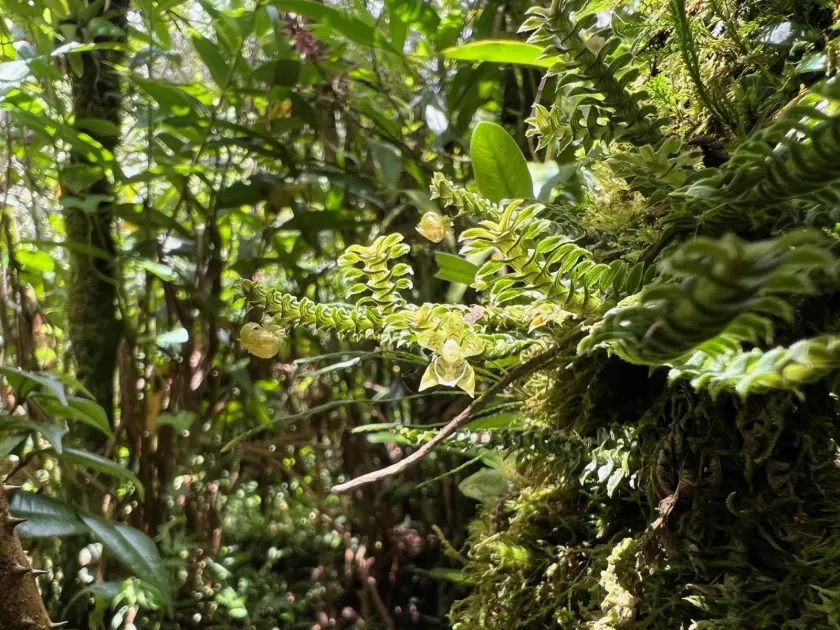
Description
Growing requirements
Dichaea hystricina is an epiphytic species belonging to the Orchidaceae family. Naturally found in the humid tropical forests of Central and South America, it grows in highland regions where the climate remains consistently cool and moist throughout the year, often at elevations exceeding 1000 meters.
Botanically, this species is noted for its sympodial growth habit. The stems are densely covered with overlapping, distichous leaves, giving the plant a distinctive, fern-like appearance. This structural density is a hallmark of the species and contributes to its high ornamental value among orchid enthusiasts.
Successful cultivation of this orchid requires high humidity levels, ideally maintained between 70% and 80%. In home environments, providing adequate air movement is crucial to prevent the accumulation of moisture in the leaf axils, which can lead to rapid fungal decay of the delicate tissues.
The plant thrives in moderate temperature ranges, ideally between 18°C and 24°C during the day. It is highly beneficial to provide a nighttime temperature drop of several degrees to stimulate proper physiological development. Direct, intense sunlight must be avoided to prevent scorched leaves and dehydration.
The optimal substrate for Dichaea hystricina must be highly aerated and quick-draining. Mounting the plant on cork bark or tree fern fiber is recommended, as this mimics the natural habitat. If potted, a mix of fine bark, charcoal, and live sphagnum moss provides the necessary moisture retention while allowing roots to breathe.
Main diseases and pests
Fungal and bacterial rot are the primary threats to Dichaea hystricina. These conditions are typically caused by stagnant air and water accumulation in the leaf joints. Maintaining a good airflow is the most effective preventative measure against these systemic infections.
Pests such as spider mites can infest the plant, particularly if the ambient humidity drops below recommended levels. These insects target the foliage, extracting chlorophyll and causing the plant to lose its vibrant green color and eventually drop its leaves.
Scale insects and mealybugs also pose significant risks. Because of the plant's dense foliage, these pests can remain undetected for extended periods. Frequent, thorough inspections of the stems and leaf bases are necessary to ensure the plant remains free from infestations.
Integrated pest management is recommended, utilizing mild insecticidal soaps or neem oil in cases of early infestation. Care should be taken to ensure that chemical treatments are not too aggressive, as epiphytic orchids are generally sensitive to high concentrations of synthetic additives.
Maintaining cleanliness in the growing area and using sterile tools for any necessary pruning are essential practices. By focusing on moisture management and consistent air circulation, growers can successfully mitigate the risk of most common orchid diseases.