
Dichaea pendula
Dichaea pendula
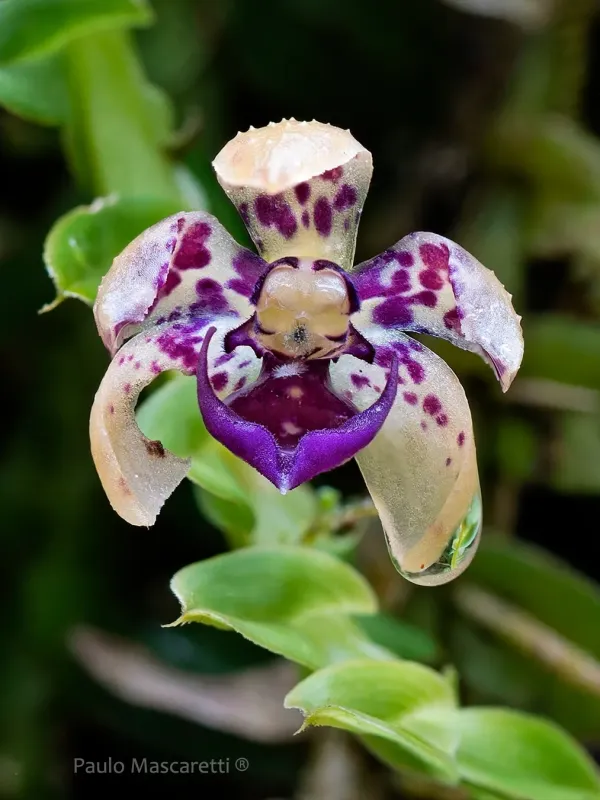
Description
Growing requirements
Dichaea pendula is a fascinating epiphytic species belonging to the Orchidaceae family. It is native to the humid tropical forests of Central and South America, where it typically thrives in the mid-to-high altitude cloud forests, clinging to the branches of trees.
Botanically, this species is characterized by its pendulous habit, with stems that cascade downward, adorned with dense, distichous leaves. Its root system is specialized for surface attachment, allowing the plant to extract moisture and nutrients directly from the air and leaf litter.
To cultivate Dichaea pendula successfully, one must replicate its natural environment with high atmospheric humidity, ideally sustained between 70% and 85%. Consistent misting or the use of automated humidifiers is essential for maintaining the vigor of the plant.
Regarding temperature, the plant prefers a cool to intermediate regime. Daytime temperatures should ideally range from 20°C to 24°C, while a significant drop of at least 5°C to 8°C at night is highly beneficial to stimulate healthy growth and periodic flowering.
The choice of medium is critical; it must be free-draining and airy. A potting mix consisting of fine bark, perlite, and a top layer of living sphagnum moss is recommended to balance moisture retention with the necessary oxygen exposure for the roots.
Main diseases and pests
Fungal rots are the most significant threat to this orchid, primarily caused by stagnant air and water accumulation in the leaf axils. Ensuring constant air circulation is the most effective preventative measure against these infections.
Common pests include mealybugs and scale insects, which often congregate in the tight crevices between the leaves. These pests can be difficult to manage once established, requiring careful manual removal and targeted insecticidal treatments.
Spider mites may infest the foliage during periods of low humidity. They weaken the plant by piercing the leaf cells, which eventually leads to chlorosis and potential leaf drop if left untreated.
Over-fertilization represents a major cultural mistake. Since Dichaea pendula is sensitive to mineral salt buildup, it is best to fertilize lightly with high-quality orchid food at one-quarter of the recommended strength.
Integrated pest management should focus on early detection. Regularly cleaning the plant and isolating new specimens help to maintain a disease-free collection and ensure the longevity of the plant in a captive environment.