
Cirrhaea dependens
Cirrhaea dependens
Description
Growing requirements
Cirrhaea dependens is a unique plant belonging to the Orchidaceae family. In its natural habitat, it leads an epiphytic lifestyle, growing on tree branches in dense South American forests, primarily in Brazil.
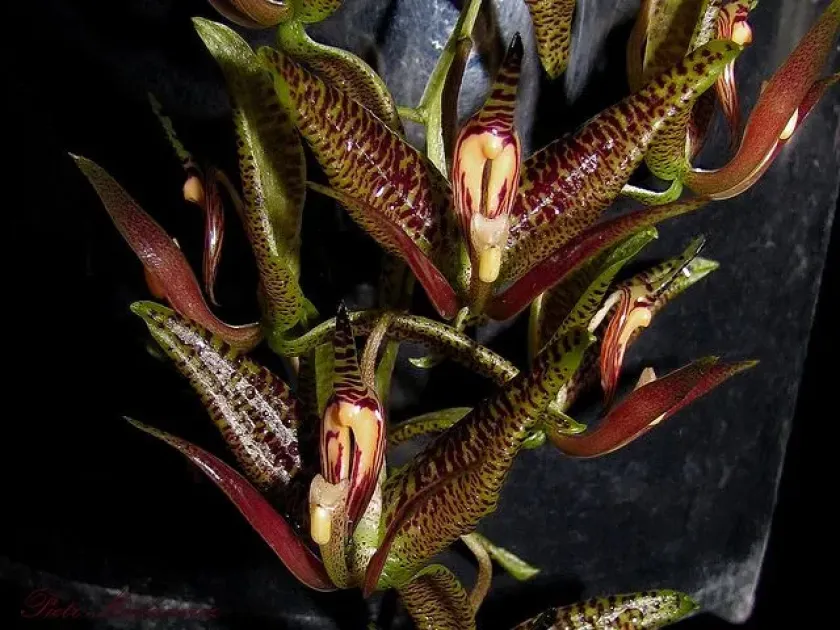
Botanically, this crop is a sympodial orchid with short pseudobulbs bearing a single leathery leaf. The primary feature of this species is its long, pendulous inflorescences carrying numerous fragrant flowers of unusual shape.
Successful cultivation requires conditions closely mimicking tropical environments: high humidity levels of 70–80% and stable temperatures between 20–25 degrees Celsius during the growing season.
The potting medium must ensure ideal drainage, as the roots are sensitive to waterlogging. The best choice is a specialized substrate consisting of medium-grade pine bark mixed with sphagnum moss and charcoal.
The plant thrives in bright, indirect light, avoiding harsh direct sun exposure. During the winter months, the orchid requires a cool dormant period with reduced watering to stimulate flower bud formation for the following season.
Main diseases and pests
The primary pests affecting this crop in indoor conditions are spider mites and scale insects, which multiply rapidly in low-humidity environments.
Overwatering the substrate significantly increases the risk of root and stem rot caused by pathogenic fungi. It is crucial to monitor the plant regularly and ensure adequate air circulation in the growing space.