
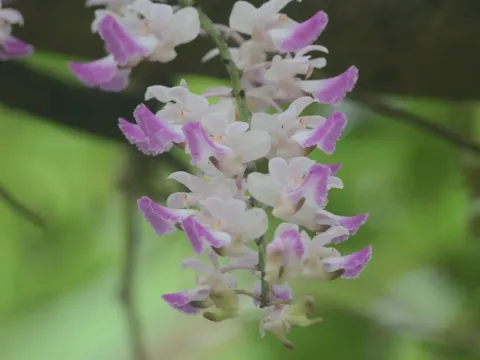
Aerides
Aerides
Aerides is a genus of epiphytic orchids belonging to the Orchidaceae family, native to the tropical forests of Asia. Cultivating these plants requires replicating their natural habitat, characterized by high humidity levels and consistent, warm temperatures.
What the section contains


Aerides
Proper lighting is essential for the healthy development of Aerides; they thrive in bright, indirect sunlight. Exposure to harsh, direct sunlight can result in scorched leaves, while insufficient light leads to poor growth and a complete lack of flowering.
Temperature requirements for this orchid range between 20°C and 26°C. Maintaining a diurnal temperature variation, where nights are slightly cooler than days, is a key agricultural technique to induce flowering and ensure the plant's overall vigor.
As true epiphytes, Aerides do not grow in standard soil. They require a coarse, well-draining substrate typically consisting of pine bark, charcoal, and sphagnum moss to ensure adequate aeration for their sensitive root systems.
Watering practices should focus on maintaining moisture without causing stagnation. It is recommended to water the plants by soaking the container and allowing it to drain thoroughly to prevent rot, particularly in the leaf axils.
The most common pests affecting Aerides include spider mites, scale insects, and mealybugs. These pests thrive in dry environments and can quickly infest the foliage if regular inspections and humidity control are not maintained.
Root rot is a significant threat caused by overwatering or using a degraded substrate that holds too much moisture. Once the roots are compromised, the plant struggles to uptake nutrients, leading to rapid decline and potential loss.
Fungal infections often manifest as dark spots on the leaves, usually appearing in conditions with high humidity and poor air circulation. Improving ventilation around the orchid is crucial to mitigating these risks.
Bacterial soft rot can occur if water sits in the crown or leaf axils for extended periods. This condition progresses rapidly, so immediate removal of infected tissue and treatment with suitable fungicides are necessary to save the plant.
Mineral salt buildup from tap water or over-fertilization can damage the roots. Periodic flushing of the substrate with clean, distilled water is a recommended practice to maintain a healthy root zone for the Aerides.