
Aerides lawrenceae
Aerides lawrenceae
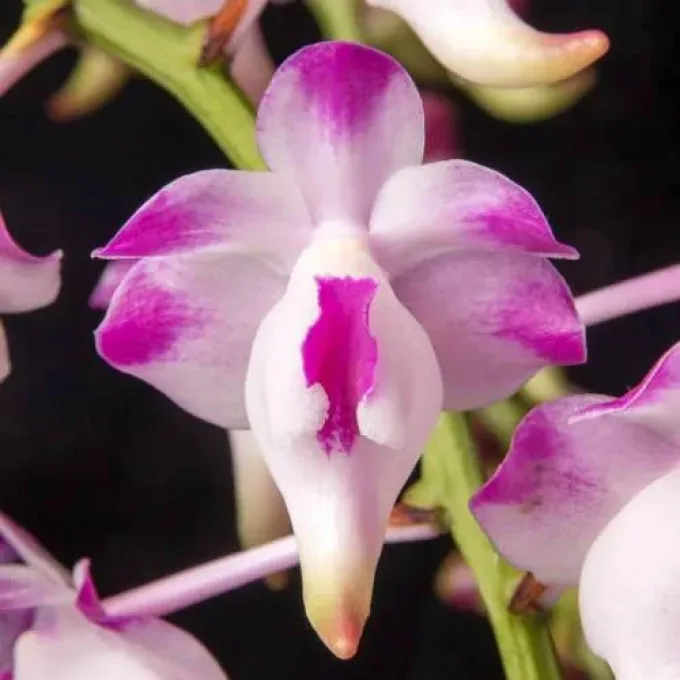
Description
Growing requirements
Aerides lawrenceae is a robust epiphyte belonging to the Orchidaceae family. It is native to the Philippines, specifically the island of Mindanao, where it thrives in humid and warm tropical forest environments.
The species is characterized by its long, strap-shaped leaves and dense, pendulous inflorescences. The aerial roots of this plant are highly specialized for absorbing moisture and nutrients from the air and decaying debris trapped in the canopy.
For optimal growth, Aerides lawrenceae requires a bright, filtered light environment. While it thrives in tropical light levels, intensity must be carefully managed to avoid direct scorching of the leaf tissues during peak sun hours.
The climate requirements include consistent year-round warmth, with an ideal temperature range of 22°C to 28°C. The plant does not possess a significant dormant phase, though growth slows slightly during cooler, less luminous months.
Proper substrate choice is critical; as an epiphyte, it demands excellent drainage. Large-grade pine bark, charcoal, and perlite mixtures are standard to ensure that the root system receives sufficient oxygen and does not become waterlogged.
Main diseases and pests
Scale insects are a common concern in the greenhouse management of this orchid. They attach themselves to the stems and leaves, extracting fluids and weakening the plant, which often necessitates manual removal or targeted application of oils.
Root rot caused by Phytophthora or Pythium species is a major threat occurring when the substrate remains saturated for too long. Effective drainage and proper spacing between plants are the best preventive strategies against root pathogens.
Spider mites can proliferate rapidly during dry periods. They primarily target the underside of the leaves, causing stippling and yellowing, which eventually leads to premature leaf senescence and reduced photosynthetic capacity.
Fungal infections, such as Botrytis, may target the flowers during periods of high humidity and poor airflow. Managing the microclimate through constant ventilation is essential to keep the floral structures dry and healthy.
Biological control methods, such as introducing predatory mites, are often preferred in specialized collections to manage pest populations without the need for harsh chemicals that could affect the delicate orchid tissue.