
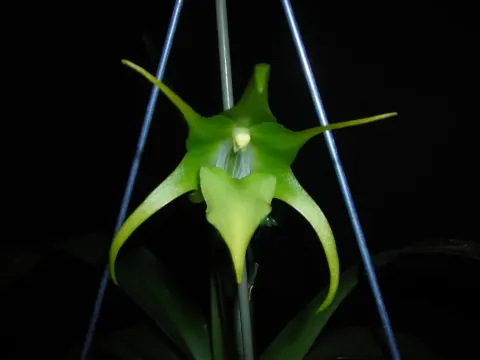
Aeranthes
Aeranthes
Aeranthes is a genus of epiphytic orchids belonging to the family Orchidaceae. Native primarily to Madagascar and the Mascarene Islands, these plants are known for their distinct pendulous inflorescences and lack of pseudobulbs, which characterizes them as monopodial orchids that require specific care regimes.
What the section contains


Aeranthes
Climate requirements for successful growth center on high humidity levels, ideally maintained between 70% and 80%. As tropical inhabitants, these plants demand stable temperatures, generally ranging from 18 to 26 degrees Celsius, and protection from cold drafts or sudden temperature drops that can stunt growth.
When considering soil and potting, it is crucial to use a coarse, highly aerated medium. Standard potting soil is unsuitable as it causes root rot. Instead, use a mix of pine bark, perlite, and charcoal, which ensures that roots receive ample oxygen while allowing water to drain away quickly after each watering session.
Lighting should be bright but filtered. In their natural habitat, they grow under the canopy of trees, meaning direct midday sun will scorch their leaves. A south or east-facing window with sheer curtains, or specialized LED grow lights, provides the intensity needed to trigger flowering cycles.
Regular agricultural maintenance includes careful irrigation. Water should be applied only when the potting media is nearly dry. Due to their epiphytic nature, Aeranthes do not tolerate standing water in the crown or the pot, as this leads to rapid bacterial decay of the root system.
The most common pests affecting this genus are spider mites and mealybugs. These thrive in dry, stagnant air conditions and can quickly colonize the leaf surfaces or the crevices of the plant, necessitating regular inspections and appropriate pest management protocols.
Pathogenic threats include various root rots and fungal infections, usually induced by poor water management or lack of ventilation. To prevent these, maintain good air circulation around the plants and ensure that the root zone is never waterlogged for extended periods.