
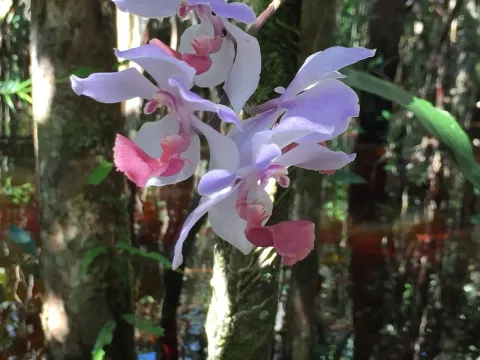
Aganisia
Aganisia
Aganisia is a genus of epiphytic plants belonging to the Orchidaceae family. These orchids are native to the tropical rainforests of South America, where they thrive in warm and humid environments, usually attached to tree trunks.
What the section contains


Aganisia
Successful cultivation requires a stable temperature ranging from 22 to 28 degrees Celsius throughout the year. The plants are highly sensitive to thermal fluctuations and must be kept away from cold drafts to ensure proper development of pseudobulbs.
Light requirements for Aganisia are relatively high, yet they must be kept in diffused light. Harsh, direct sunlight will quickly scorch the foliage, so greenhouse shading systems are typically implemented to maintain optimal illumination levels.
The substrate must prioritize drainage and aeration. A mixture of pine bark, charcoal, and sphagnum moss is considered the industry standard, allowing the roots to breathe while maintaining consistent moisture levels around the rhizome.
Maintaining high humidity levels, ideally between 70% and 85%, is vital for Aganisia. Professional growers often utilize automated misting systems to create the specific microclimate necessary for the plant to produce its characteristic fragrant blooms.
Spider mites are a persistent threat to Aganisia, especially when the humidity levels drop below optimal parameters. Frequent inspection of the underside of leaves is recommended for early detection of these pests.
Root rot, primarily caused by waterlogged substrates or poor aeration, is the most common physiological disorder in these orchids. To prevent this, strict adherence to a scheduled watering regimen is essential.
Mealybugs can infest the plant, hiding in leaf axils and around the pseudobulbs. Systemic insecticides are generally required to eliminate these pests without damaging the delicate orchid tissues during the growth phase.
Fungal leaf spot diseases can spread rapidly in poorly ventilated greenhouse conditions. Ensuring constant air movement through the use of circulation fans is a critical cultural practice to mitigate these risks.
Viral infections may manifest as irregular yellow patterns or necrosis on the leaves. As these diseases are incurable, plants showing signs of viral activity should be isolated and removed to protect the remaining collection.