
Aerides ringens
Aerides ringens
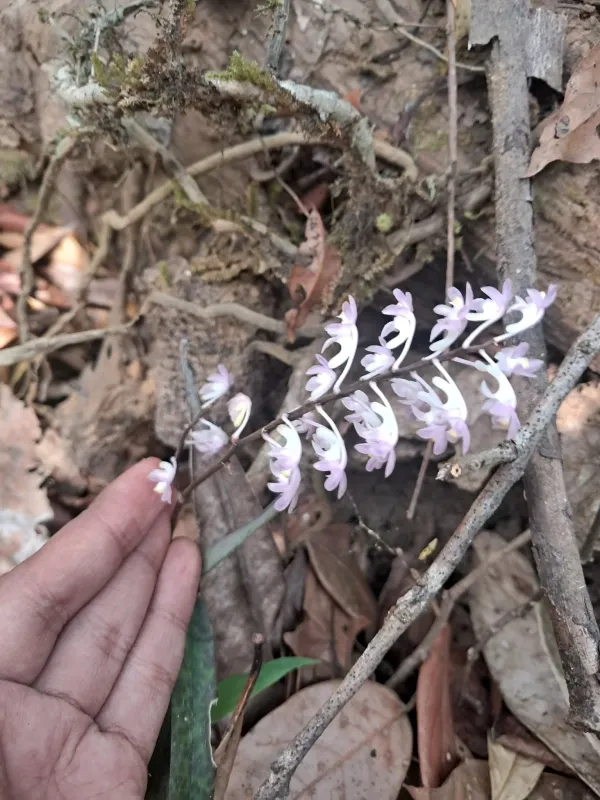
Description
Growing requirements
Aerides ringens is a perennial epiphytic orchid belonging to the Orchidaceae family. Native to the tropical regions of Southern India and Sri Lanka, it thrives in high-canopy habitats where it attaches to tree branches and absorbs moisture through its specialized velamen-covered roots.
The plant exhibits a monopodial growth habit, featuring robust stems lined with thick, leathery, distichous leaves. During its blooming phase, it produces long, pendulous racemes of fragrant flowers, which are highly valued for their unique morphology and distinctive spurred lip.
To cultivate Aerides ringens successfully, a high-humidity environment, ideally maintained between 65% and 85%, is critical. Given its epiphytic nature, this orchid performs best when mounted on cork bark or grown in slotted wooden baskets filled with coarse, well-draining media like charcoal or large fir bark.
The plant requires moderate temperatures, typically ranging from 20 to 28 degrees Celsius, with a noticeable drop in nighttime temperature to trigger healthy vegetative and reproductive cycles. Bright, indirect light is essential, while direct, harsh sunlight should be avoided to prevent foliar damage.
Consistent watering is necessary, but the root system must have ample access to airflow to ensure quick drying cycles. Stagnant water around the crown or root zone is detrimental, often leading to rapid tissue decline if air circulation is insufficient.
Main diseases and pests
The primary threats to Aerides ringens are fungal and bacterial rots, often induced by excessive moisture trapped within the leaf axils or the root mass. These pathogens thrive in poorly ventilated areas and can quickly lead to the systemic decay of the plant.
Common orchid pests, such as scale insects and mealybugs, can infest the plant, hiding in the junctions between leaves and the stem. Manual removal or treatment with appropriate horticultural oils is recommended if these pests are identified during routine inspections.
Spider mites represent a significant risk, particularly during dry seasons or in indoor environments where humidity levels are inadequately maintained. These pests weaken the plant by piercing leaf tissue and sucking cellular fluids, leading to reduced vigor.
Nutrient toxicity, often resulting from the accumulation of mineral salts in the growing medium, can cause root tips to burn and die back. Regular flushing of the substrate with pure water is a standard practice to mitigate salt buildup.
Poor circulation combined with high humidity can promote the development of powdery mildew or other superficial molds. Maintaining a small, gentle fan to ensure constant air movement is the most effective preventative measure against such environmental threats.