
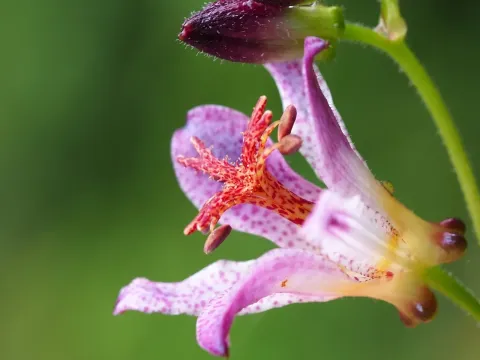
Toad Lily
Tricyrtis
Tricyrtis, commonly known as the Toad Lily, is a perennial herbaceous plant belonging to the Liliaceae family. It is highly valued for its intricate, orchid-like flowers which provide late-season interest in shaded garden areas.
What the section contains


Toad Lily
The plant is native to East Asia, spanning regions from Japan to the Himalayas. It is specifically adapted to forest understories, which dictates its preference for filtered light and stable moisture levels throughout the growing season.
Toad lilies thrive in rich, well-draining soil that is high in organic matter. While they require consistent moisture, they cannot tolerate waterlogged conditions, particularly during the winter dormancy period when the rhizomes are susceptible to rot.
Climate adaptability is a key factor; they prefer temperate zones with mild, humid summers. In areas with extreme winter temperatures, deep mulching is necessary to protect the rhizomes and ensure successful regrowth in the following spring.
Cultivation practices involve regular irrigation and the application of balanced organic fertilizers during the spring growth phase. Maintaining a layer of organic mulch helps regulate soil temperature and conserve moisture, which is essential for plant vigor.
Slugs and snails are the most significant pests for Tricyrtis, often causing severe damage to the foliage during moist weather. Integrated pest management strategies, such as physical barriers or environmentally friendly molluscicides, are recommended.
Botrytis blight, or gray mold, can affect the plant when air circulation is poor and humidity levels remain high for extended periods. Pruning to provide adequate space between plants helps mitigate this fungal risk significantly.
Root rot occurs primarily in heavy, poorly drained soils where water stagnation is common. Proper soil preparation with the inclusion of organic conditioners or drainage materials is critical for long-term plant health.
Aphids occasionally infest the developing flower buds and new shoots. Frequent inspection allows for early detection and manual removal or the application of insecticidal soaps to keep populations below the economic injury level.
Weed control is essential, as competing vegetation can reduce airflow and harbor pests. Maintaining a clean cultivation area ensures that the plants receive adequate nutrients and remain less susceptible to environmental stress.