
Tricyrtis hybrids
Tricyrtis hybrids
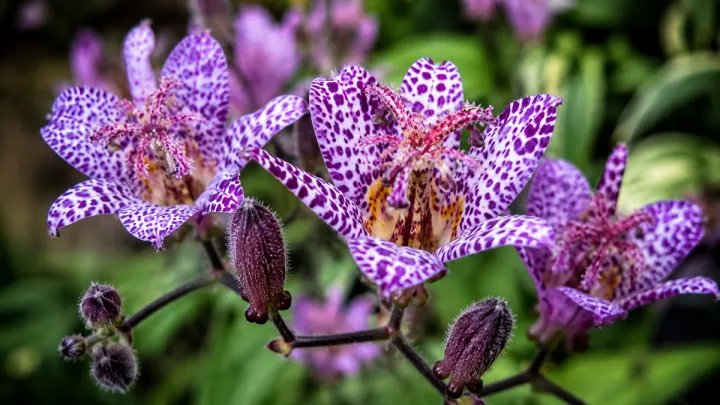
Description
Growing requirements
Tricyrtis hybrids belong to the Liliaceae family and are popular ornamental perennials characterized by unique, orchid-like speckled flowers. Their wild ancestors are native to the forest regions of East Asia, primarily Japan, where they thrive in rich, humus-filled soils.
The culture requires a shaded or partial shade environment, avoiding direct exposure to hot midday sun which can scorch the foliage. Stability in environmental conditions is crucial for the healthy development of the plant throughout the growing season.
The ideal soil profile should be loose, fertile, and moist, with a slightly acidic to neutral pH. Excellent drainage is non-negotiable, as waterlogged conditions during the dormant period can lead to the rapid decay of the fleshy rhizomes.
Standard agrotechnical practices include consistent watering during dry spells and the application of organic mulch. Mulching helps to mimic the natural forest floor habitat, retaining soil moisture and suppressing competitive weed growth.
In temperate zones, winter protection is often required to ensure survival against frost. Applying a layer of straw, bark, or dry leaves provides sufficient insulation for the underground parts during the coldest winter months.
Main diseases and pests
Slugs and snails are the primary pests that damage Tricyrtis foliage, often consuming large portions of young leaves in a single night. Integrated pest management strategies, such as physical barriers or biological controls, are recommended for protection.
Fungal issues, including various rots and leaf spots, may occur if the plants are placed in areas with poor airflow and excessive humidity. Maintaining proper spacing and removing dead foliage are essential preventative measures against these pathogens.