
Tricyrtis macropoda
Tricyrtis macropoda
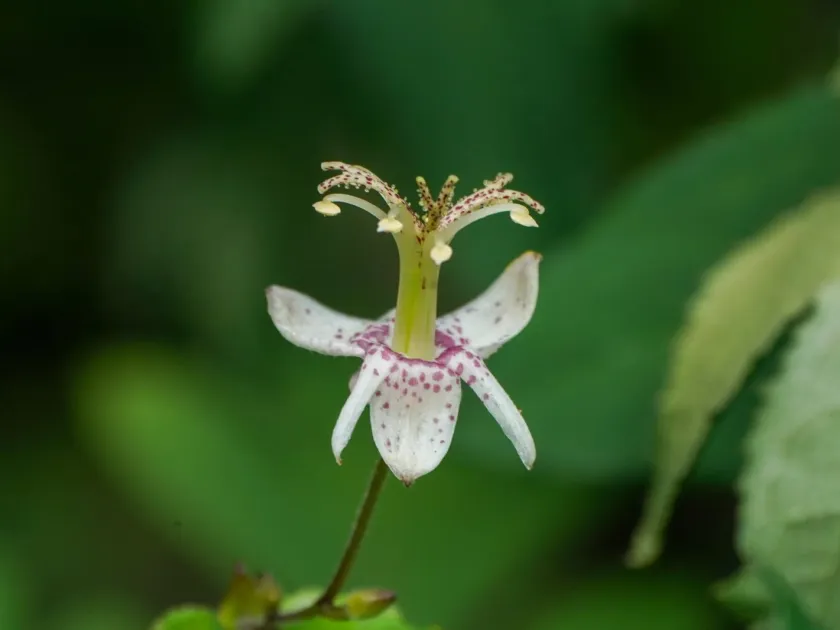
Description
Sowing dates
Propagation of Tricyrtis macropoda, commonly known as a toad lily, is typically achieved through seed sowing or the division of rhizomes.
Seeds require a period of cold stratification to break dormancy, making fall sowing in outdoor seedbeds or pots the most natural and effective method.
For spring sowing, seeds must be kept in a refrigerator at approximately +4°C for several weeks to simulate winter conditions before being planted in warm soil.
Division of mature clumps is best performed in early spring as new growth emerges, ensuring each segment has healthy roots and viable buds.
Proper spacing is essential; plant the rhizomes about 30–45 cm apart to allow for clump expansion and healthy foliage development over the coming years.
Growing requirements
This species belongs to the Liliaceae family and originates from the humid, temperate forests of China and Japan, dictating its specific environmental needs.
The plant thrives in partial to full shade, requiring protection from harsh, direct sunlight that can easily scorch its delicate, lush green leaves.
Soil conditions are critical: it requires a rich, moisture-retentive, yet well-draining substrate, ideally amended with organic matter like leaf mold or compost.
Consistent soil moisture is vital for the plant's health, and mulching around the base is recommended to help keep the roots cool and prevent drying out.
It prefers slightly acidic to neutral soil pH levels and performs best when sheltered from strong winds in a woodland or shade-garden setting.
Main diseases and pests
Slugs and snails are the most significant pests for Tricyrtis macropoda, particularly during damp spring and autumn weather when they feed on tender shoots.
Integrated pest management, including the use of physical barriers like crushed eggshells or iron-based bait, is recommended to protect the floral display.
Poor drainage can lead to root rot, which is often fatal, necessitating careful site selection and the addition of grit or sand to heavy clay soils.
Leaf spot diseases may occur if the foliage remains wet for extended periods, making it important to water at the base rather than over the leaves.
Aphids can occasionally cluster on developing buds; regular monitoring and prompt treatment with insecticidal soap can prevent damage to the flowers.