
Trout lily
Erythronium revolutum
Description
Sowing dates
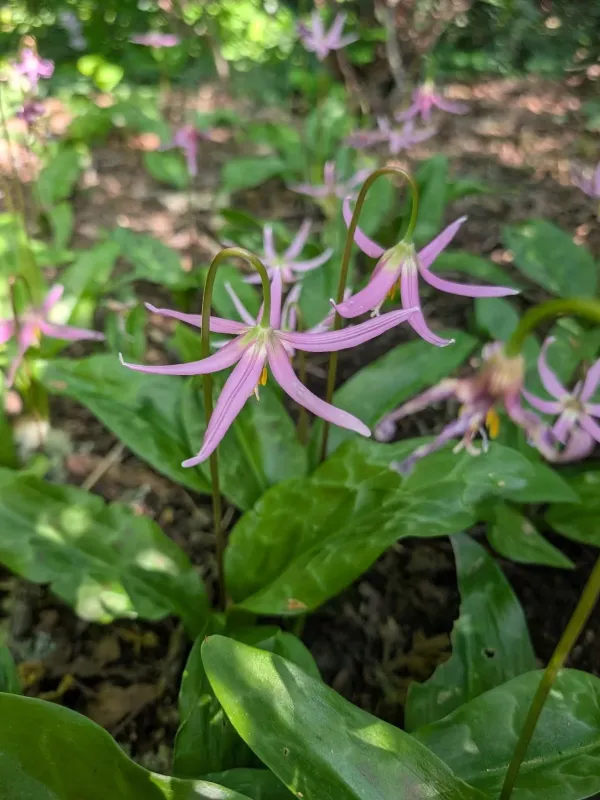
Erythronium revolutum, commonly known as the trout lily or mahogony fawn lily, belongs to the Liliaceae family. It is a perennial bulbous plant widely valued for its ornamental garden utility.
The most effective planting time for bulbs is late summer to early autumn. Planting during this dormancy phase ensures the bulbs establish their root systems before the onset of winter.
Bulbs should be planted at a depth of 10–15 cm. Maintaining a spacing of approximately 15 cm between plants is essential to ensure adequate nutrient access and to prevent overcrowding.
Seed propagation is possible but is characterized by a slow growth rate, with plants typically taking 5 to 7 years to reach flowering maturity from the initial sowing.
When propagating via seeds, it is recommended to sow them in late autumn, allowing for a natural cold stratification period throughout the winter months to maximize germination rates.
Growing requirements
Native to moist forests in North America, this species thrives in partial shade. It is highly sensitive to intense, direct midday sun, which can cause dehydration and leaf scorching.
The soil must be well-draining, loose, and rich in organic matter. A mixture imitating forest floor conditions, consisting of leaf mold and sandy loam, is considered ideal for this plant.
Erythronium revolutum prefers neutral to slightly acidic soil conditions. Proper aeration is crucial to prevent the bulbs from rotting, especially during the dormant season.
Consistent moisture is required during the spring growth phase, but the soil should not be allowed to become waterlogged. Good drainage is the most critical factor for long-term survival.
The plant demonstrates good frost tolerance. However, in regions lacking consistent snow cover, applying a layer of organic mulch provides necessary protection against deep ground freezing.
Main diseases and pests
Fungal rots are the primary threat to the bulbs, often triggered by excessive moisture and poor soil aeration. These infections can quickly destroy the bulbous rootstock if not addressed.
Garden pests, particularly slugs and snails, are known to feed on the foliage during early spring. Monitoring and the application of organic or chemical deterrents are often necessary.
Small mammals and rodents may consume the bulbs during the winter dormancy period. Using hardware cloth or wire baskets during planting is a common preventive measure.
Fusarium wilt can occasionally affect the plants, causing leaves to yellow and wilt prematurely during the growing season.
To mitigate disease risks, ensure proper sanitation practices by cleaning up dead foliage in late summer and treating new bulbs with broad-spectrum fungicides before placing them in the soil.