
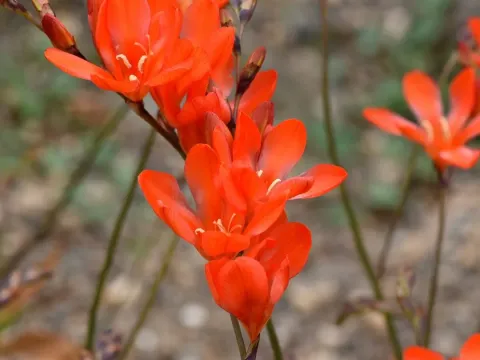
Tritonia
Tritonia
Tritonia bulbs should be planted in the spring, once the soil has warmed up to at least 10–12 degrees Celsius. In most regions, this timing coincides with the late spring period to avoid late frosts.
What the section contains


Tritonia
Prior to planting, it is recommended to treat the bulbs with a fungicide to prevent soil-borne diseases. This pre-planting preparation ensures a stronger start for the plants during their initial growth phase.
Bulbs are typically planted at a depth of 5 to 8 centimeters, with a spacing of 10–15 centimeters between them. This spacing is crucial for providing enough room for the plants to thrive and develop robust flower spikes.
Choosing the right location is vital for success; a spot that receives full sun and provides natural protection from strong, drying winds is ideal for this genus of the Iridaceae family.
Applying a layer of mulch after planting helps maintain soil moisture levels and reduces weed competition. This creates a more stable environment for the bulbs as they begin to establish their root systems.
Tritonia thrives in loose, well-draining soil with a neutral to slightly acidic pH. Proper drainage is the most important requirement, as these bulbs are highly susceptible to rotting in waterlogged soil conditions.
The plant requires significant amounts of sunlight to flower effectively. In shaded environments, the plants will become spindly, and the vibrant color of their blooms will be significantly muted.
Irrigation should be regular but cautious. During the active growing and flowering season, the soil should remain moist, but it is essential to allow the surface to dry slightly between watering sessions.
Balanced liquid fertilizers are recommended throughout the growing season to support leaf development and subsequent blooming. Applying nutrients during early growth and pre-budding stages is highly effective.
Temperature management is key for growers in cooler climates. Since Tritonia is not fully frost-hardy, the bulbs must be lifted from the ground and stored in a protected environment during the winter months.
The primary threats to Tritonia health are fungal infections, such as gray mold and fusarium. These diseases usually flourish in conditions with high humidity, poor air circulation, and poorly drained soil.
To mitigate these risks, it is essential to provide adequate spacing between plants and avoid over-head irrigation. Removing and disposing of infected plant material immediately helps prevent spread.
Insect pests, particularly thrips and spider mites, can cause considerable damage by feeding on foliage and buds. Infestations lead to stunted growth and discolored, unattractive leaves and flowers.
Integrated pest management, including the use of targeted acaricides and insecticides, is necessary if threshold levels of pests are exceeded. Regular monitoring is the most effective way to catch outbreaks early.
Maintaining a clean garden area, free of weeds and dead organic debris, significantly reduces the habitats where these pests can hide and propagate throughout the growing season.
Bulb harvesting takes place in autumn, specifically after the foliage begins to wither and yellow. Timing is critical, and harvesting should be completed before the first severe soil freeze of the season.
After lifting the bulbs from the ground, they should be cleaned of excess soil and allowed to air-dry in a cool, shaded, and well-ventilated location for two to three weeks to prepare for dormancy.
Once dried, the bulbs should be cleaned of old roots and loose tunic layers. Sorting the bulbs by size helps in organizing future planting schemes, while damaged bulbs should be discarded to protect healthy stock.
Storage requires a cool and dry environment, typically between 5–8 degrees Celsius. Storing them in breathable containers with peat or sawdust helps prevent moisture accumulation and rot during winter.
Regular inspections throughout the winter storage period allow for the identification and removal of any deteriorating bulbs. This practice ensures that the gardener starts the next season with healthy material.