
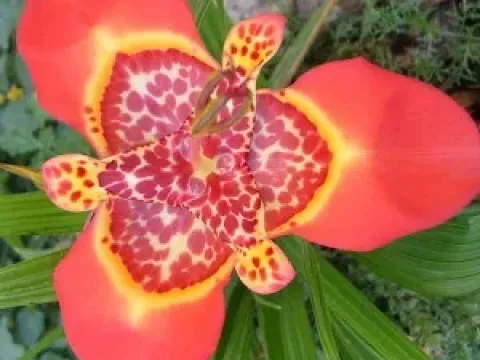
Tigridia
Tigridia Juss.
Tigridia, a member of the Iridaceae family, should be planted in open ground only after all risk of frost has passed, typically in late May.
What the section contains

Tigridia
The ideal planting time corresponds to when the soil temperature reaches at least 10-12 degrees Celsius at the bulb depth to ensure successful rooting.
Bulbs are planted 8-10 centimeters deep, maintaining a spacing of 15-20 centimeters between plants to allow for proper airflow and development.
Starting bulbs in pots indoors in April is an excellent strategy for gardeners in cooler regions to extend the growing season and achieve earlier blooming.
As a tender bulb, Tigridia requires annual lifting and storage over winter, as it is not winter-hardy in temperate and cold climate zones.
Tigridia is a sun-loving plant that requires full sun exposure to produce its characteristic, vibrant, and intricate floral patterns.
The soil must be light, fertile, and well-draining, with a neutral or slightly acidic pH to promote optimal bulb health and development.
Poorly drained soils are detrimental to this crop, as excessive moisture often leads to root and bulb rot, particularly in clay-heavy substrates.
Consistent, moderate moisture is essential throughout the active growth phase, especially during hot and dry summer weather conditions.
Applying balanced, low-nitrogen fertilizers during the budding stage can help enhance floral display and plant vigor without inducing excessive foliage growth.
Fungal diseases, specifically basal rot and fusarium, are the most significant threats to Tigridia, often triggered by overwatering or poor drainage.
Soil-dwelling pests like wireworms and mole crickets can severely damage the underground bulb tissue, affecting the plant's overall uptake of nutrients.
High humidity levels can encourage leaf spot diseases, which may necessitate the application of preventive systemic fungicides during the growing season.
Slugs and snails are common pests that feed on young foliage, often requiring manual removal or organic barriers to protect the developing plants.
Effective pest management relies on keeping the garden area free of debris and maintaining soil health through regular monitoring and appropriate cultivation practices.
Harvesting bulbs should occur in autumn, before the first hard frost, as the foliage naturally begins to turn yellow and die back.
Once lifted, the bulbs must be cleaned of soil and cured in a cool, well-ventilated location for several weeks to allow the outer layers to harden.
After curing, the remaining stems are removed, and the bulbs are inspected for any signs of decay or damage before storage.
Storage should be performed in a cool, dark environment, ideally packed in dry peat, vermiculite, or sand, at a constant temperature of 3-7 degrees Celsius.
Periodic checks during the winter storage period are crucial to identify and discard any bulbs showing signs of infection, protecting the health of the collection.