
Flame freesia
Tritonia deusta
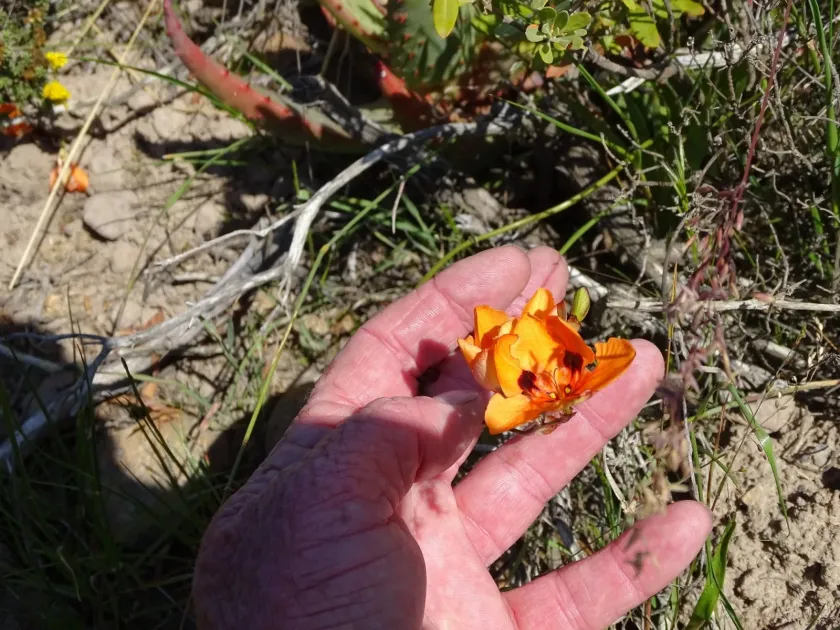
Description
Sowing dates
Tritonia deusta, commonly known as Flame freesia, belongs to the Iridaceae family. It is a cormous perennial that thrives in climates with warm, sunny summers and distinct dry seasons.
Planting should occur in spring once the soil temperature has reliably risen above 10 degrees Celsius. This timing ensures that the corms break dormancy safely and begin rapid root development.
Place the corms approximately 5 to 7 centimeters deep in the soil, ensuring that the pointed end faces upwards. A light, well-draining soil mix is essential to prevent early rot.
Select a location in the garden that receives at least six to eight hours of direct sunlight per day. If planted in partial shade, the stems may stretch and require additional support.
In regions with cold winters, bulbs must be planted in containers or dug up after the first light frosts. This plant is not hardy and will not survive temperatures below freezing in wet soil.
Growing requirements
This species requires sandy or loamy soils with excellent drainage capabilities. Heavy soils should be amended with organic compost or grit to improve their structure and prevent waterlogging.
Watering should be regular during the active growth phase, especially during the spring bloom. However, it is vital to reduce moisture as the foliage begins to yellow and die back in late summer.
Fertilization with a balanced, low-nitrogen liquid fertilizer is recommended during the bud formation stage. High nitrogen levels lead to lush foliage but reduce the intensity and quantity of flowers.
Tritonia deusta requires a dry resting period after the foliage withers. During this time, the soil should be kept almost dry to allow the corms to mature properly for the next season.
Mulching is not recommended for this species as it can trap too much moisture around the crown, leading to fungal issues. Keep the area around the base of the plant clear and clean.
Main diseases and pests
Botrytis and other fungal rots are the most common threats to the corms, particularly in poorly drained soil. Always discard any bulbs that appear soft or have visible signs of decay before planting.
Pests such as spider mites and aphids can become a problem in hot, dry conditions. Regular misting or the use of appropriate horticultural soaps can help manage these populations effectively.
Thrips can also damage the flowers, leading to unsightly streaks and deformed petals. Early intervention with suitable systemic insecticides is necessary to preserve the aesthetic quality of the blooms.
Viruses transmitted by sap-sucking insects can cause mottling and stunted growth. Infected plants should be removed and destroyed immediately to prevent the spread of the virus to healthy bulbs.
To keep the plants healthy, ensure proper ventilation in the garden. Avoiding overhead irrigation can also significantly reduce the likelihood of leaf spots and other moisture-related fungal infections.