
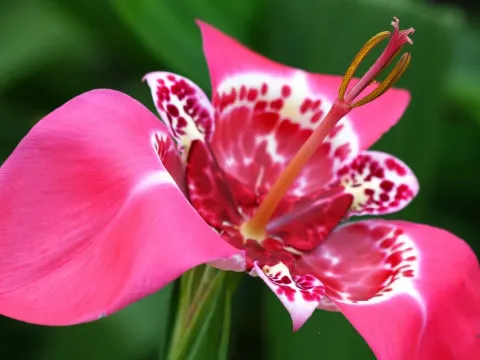
Tigridia
Tigridia
Tigridia, commonly known as the Tiger flower, is a perennial bulbous plant belonging to the Iridaceae family. Its native habitat spans from Mexico to Central and South America, where it thrives in well-drained, sun-exposed mountainous terrain.
What the section contains


Tigridia
Bulbs should be planted in the garden during late spring once the threat of frost has passed and soil temperatures have consistently risen above 12°C. This timing ensures steady root development and avoids cold-induced dormancy.
The planting depth should be approximately 8–10 cm, with a recommended spacing of 15–20 cm between bulbs. Proper spacing is essential to ensure adequate airflow and prevent the development of fungal diseases during the humid summer months.
For regions with shorter growing seasons, starting bulbs in pots indoors in March is highly recommended. This strategy allows the plants to establish roots early and produce flowers by mid-summer.
While propagation through seeds is possible, it is a slower process, typically requiring two to three years of cultivation to reach flowering size. Seedlings must be kept in a controlled, warm, and humid environment.
Tigridia requires full sunlight to thrive and bloom effectively. Selecting a site with at least six to eight hours of direct daily sunlight is crucial for the development of its vibrant, complex flowers.
Soil must be light, porous, and exceptionally well-drained. Sandy loam soils amended with organic compost are ideal. Heavy clay soils must be improved with drainage materials to prevent root rot, which is the most significant danger to the bulb.
The plant prefers a neutral soil pH range of 6.0 to 7.0. If the soil is excessively acidic, a light application of lime can help optimize nutrient availability for the bulbs.
Watering must be regular throughout the growing season, particularly during the dry periods of late spring and summer. The substrate should be kept consistently moist but never waterlogged, as stagnant water is lethal to the bulbs.
Fertilization with a balanced, slow-release fertilizer at planting time, followed by a potassium-rich feed before the first bloom, supports long-term bulb health and the development of vigorous new offshoots.
The primary threats to Tigridia are fungal pathogens, particularly those triggered by moisture retention. Botrytis and Fusarium rot are the most common infections found in improperly drained planting beds.
Proactive prevention includes soaking bulbs in a systemic fungicide before planting. Careful monitoring for any signs of decay during the growing season is essential for early intervention and disease control.
Pests such as aphids can cause significant damage by feeding on foliage, which transmits viral diseases and stunts plant growth. Regular inspection and the use of insecticidal soap are recommended for management.
Mole crickets pose a specific threat in certain regions by burrowing underground and feeding on the bulbs. Using soil-incorporated granular insecticides can help protect the root zone from these subterranean pests.
Thrips can also affect the plants, causing discolored or silvery streaks on the leaves. Integrated pest management, including the removal of infested plant parts, helps maintain a healthy display of flowers.
Tigridia is not winter-hardy and will perish if left in frozen ground. In temperate climates, lifting the bulbs for winter storage is a mandatory step in the annual cultivation cycle.
Harvesting should occur in autumn after the first light frost or once the foliage has naturally turned yellow, indicating that the bulb has completed its seasonal growth phase.
Once lifted, the bulbs must be cleaned of excess soil and cured in a dry, well-ventilated location for approximately two to three weeks to ensure the base is thoroughly dry before final storage.
Store the dormant bulbs in a cool, dry environment at temperatures ranging between 4°C and 6°C. Peat moss, sand, or perforated paper bags are excellent for preventing desiccation while maintaining adequate air circulation.
Routine checks during winter storage are necessary to identify and remove any rotting bulbs, which helps protect the overall health of the collection until they are ready for spring planting.