
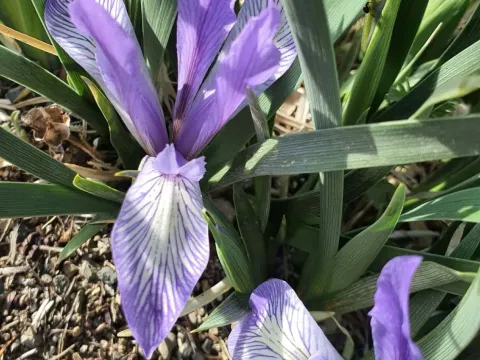
Iris lactea
Iris lactea
Sowing seeds of Iris lactea is best performed in the autumn, allowing the seeds to undergo natural stratification within the soil throughout the winter months.
What the section contains
Iris lactea
For spring sowing, seeds require an artificial stratification period of at least two to three months at cool, positive temperatures to break seed dormancy.
Seeds should be planted at a shallow depth of approximately 1 to 2 centimeters to ensure successful emergence through the soil surface.
Commercial plantations require an inter-row spacing of 40 to 50 centimeters to facilitate efficient mechanical maintenance and manual weeding practices.
Maintaining a consistent moisture level is crucial during the germination phase to ensure a uniform stand of seedlings in the production field.
Iris lactea, commonly known as the milk-white iris, is a robust herbaceous perennial belonging to the Iridaceae family of flowering plants.
This species is widely recognized for its exceptional environmental plasticity, enabling it to thrive in saline and alkaline soils that are hostile to most crops.
It prefers full sun exposure, although it exhibits high tolerance to partial shade, making it a versatile choice for various landscape and ecological applications.
While adaptable to diverse soil types, it flourishes best in well-drained, fertile loams with a neutral to slightly alkaline reaction profile.
The plant possesses a deep-reaching root system, which contributes significantly to its high drought tolerance and overall resilience in arid climates.
The economic value of Iris lactea lies primarily in its use as an ornamental plant and a highly effective phytoremediation tool for degraded land.
The plant demonstrates significant biological productivity, generating substantial biomass and numerous flowering stalks during the peak growing season.
In nursery production, high yields of plant material are achievable through controlled division and intensive fertilization practices during the establishment phase.
As a soil stabilizer, the species plays a vital role in protecting slopes from wind and water erosion, thereby contributing to the health of the local ecosystem.
The genetic diversity found within this species remains a focal point for researchers aiming to improve stress tolerance in other iris cultivars.
The primary threats to Iris lactea are fungal diseases such as heterosporiosis, which typically causes necrotic lesions on the foliage during periods of high humidity.
Waterlogged soil conditions present a significant risk, as they promote root rot and can lead to rapid decline in plant health and overall survival rates.
Common insect pests include iris borers and various aphids that target the succulent tissues of buds and stalks, potentially reducing reproductive capacity.
Integrated pest management strategies involve systematic field inspections, removal of infested debris, and the application of selective treatments as needed.
- Ensuring adequate soil drainage to prevent fungal growth.
- Applying fungicides when environmental conditions favor disease spread.
- Using systemic insecticides to control sap-sucking pests.
Harvesting seeds requires careful timing, as seed pods should be gathered just before they split naturally to prevent the loss of genetic material to the soil.
Rhizome division is the preferred method for propagation, carried out in late summer when the plant enters its natural dormant phase post-flowering.
Care must be taken during excavation to preserve the integrity of the root system, which is essential for ensuring quick re-establishment after replanting.
Collected rhizomes should be cleaned of excess substrate and air-dried in a shaded area to minimize the risk of infection at the cut sites.
Proper storage conditions involve keeping the rhizomes in a cool, dark environment packed in slightly moist peat or sand until the next planting window.