
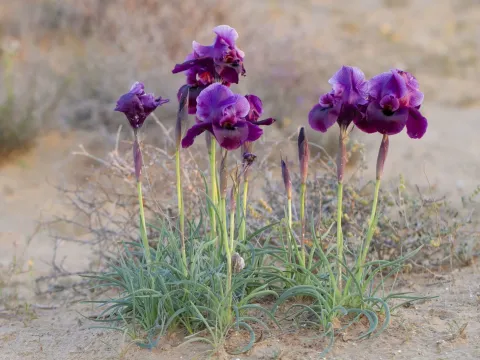
Iris mariae
Iris mariae
Iris mariae is a perennial bulbous plant belonging to the Iridaceae family. It is natively distributed in the arid regions of the Negev Desert and Sinai, where it has evolved to thrive in high-light environments with sandy soils.
What the section contains
Iris mariae
Successful cultivation of this species requires mimicking its natural desert cycle. The plant demands a distinct dormant phase during the hot, dry summer months, during which any moisture can be fatal to the bulb.
Soil composition is the most critical factor for this crop. It must be planted in extremely well-draining, gritty, or sandy soil. Even a slight accumulation of water around the bulb will inevitably lead to rot.
Regarding climate, Iris mariae prefers areas with significant temperature fluctuations between day and night. It requires full exposure to direct sunlight throughout its growing season to develop its characteristic deep-veined flowers.
In terms of practical use, it is a highly specialized plant primarily found in botanical collections or alpine houses. It is not suitable for general flowerbeds due to its specific needs regarding moisture control and substrate quality.
Fusarium rot is the most common disease affecting Iris mariae, typically triggered by high soil moisture during the transition periods. This fungal infection rapidly destroys the basal plate of the bulb.
Botrytis, or gray mold, can also affect the foliage if ventilation is poor. Ensuring good airflow around the base of the plant is essential to prevent the spread of spores during cool and humid springs.
Soil-dwelling pests like wireworms pose a significant threat to the bulb structure. They tunnel into the bulb, causing direct mechanical damage and introducing pathogens that accelerate the rotting process.
Root aphids may colonize the roots in greenhouse conditions, leading to stunted growth and yellowing of the foliage. Regular soil inspections are recommended for container-grown specimens to detect early signs of infestation.
Bacterial soft rot is a severe concern that can wipe out an entire planting if humidity levels are not carefully managed. If a bulb becomes mushy and emits a foul odor, it must be removed and the surrounding soil treated or replaced.