
Iris lutescens
Iris lutescens
Description
Growing requirements
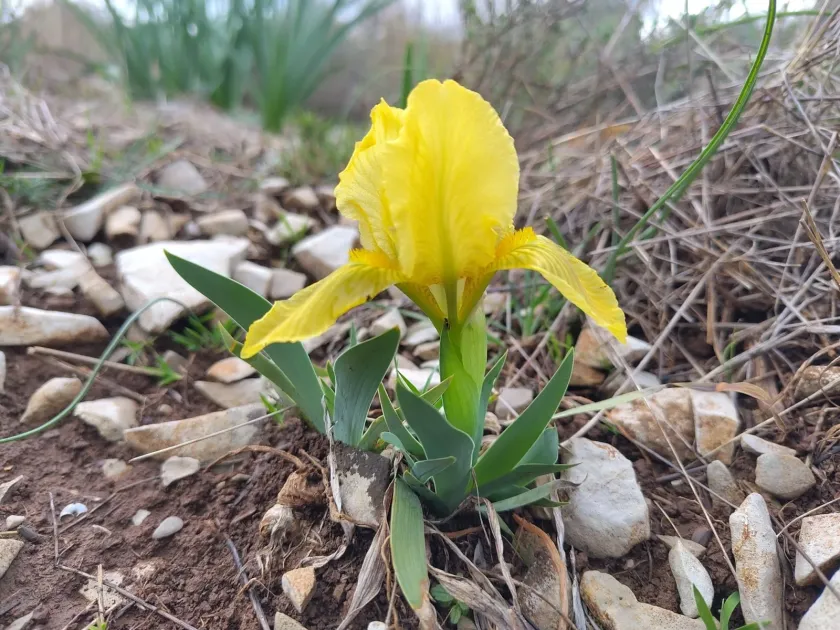
Iris lutescens is a perennial flowering plant belonging to the Iridaceae family. Native to the Mediterranean regions of Europe, this species is highly valued in horticulture for its dwarf habit, typically reaching a height of only 10 to 30 centimeters.
The plant features sword-shaped foliage and flowers that appear early in the spring, showcasing a range of colors from yellow to deep violet. Its rhizomatous structure allows for rapid spread, forming dense colonies that are well-suited for rocky or sunny environments.
Cultivation of this species requires well-draining soil with a neutral to slightly alkaline pH. It thrives in locations with full sun exposure, which is essential for healthy bud development and preventing moisture-related issues within the crown.
The species demonstrates excellent drought tolerance once established, making it a sustainable choice for water-wise landscaping. However, consistent drainage must be maintained, as the rhizomes are highly susceptible to rot when kept in waterlogged conditions.
In landscape architecture, Iris lutescens is utilized in rock gardens, borders, and alpine-style plantings. Its early blooming cycle provides early-season color, making it a key component in early spring garden designs.
Main diseases and pests
The primary concern for growers of Iris lutescens is the development of bacterial soft rot, which is often triggered by poor soil drainage and high humidity. This pathology rapidly affects the rhizome, leading to plant collapse.
Pest threats include the iris fly, which targets developing flower buds, and various soil-dwelling larvae that may feed on the rhizomes. Slugs and snails can also cause significant aesthetic damage to the leaves during damp weather periods.
Management strategies involve strict adherence to planting depths, ensuring the upper part of the rhizome is exposed to sunlight. This practice reduces humidity around the crown and serves as a natural deterrent against fungal pathogens.
Cultural practices such as regular division of older clumps help to maintain plant vigor and prevent the accumulation of soil-borne pests. Removing decaying foliage at the end of the season prevents overwintering of pathogens.
Chemical control, if necessary, should be applied with precision. Fungicides and systemic insecticides are effective, provided they are applied before widespread infection occurs within the planting zone.