
Iris graeberiana
Iris graeberiana
Description
Growing requirements
Iris graeberiana belongs to the Iridaceae family and is a prominent representative of the Juno irises group. This perennial plant is native to the mountainous regions of Central Asia, specifically the Tien Shan, where it thrives on rocky slopes and foothills, demonstrating high adaptability to challenging environments.
The culture has a distinct structure: it develops a fleshy bulb with thick, perennial roots that are extremely sensitive to mechanical damage. The stem reaches a height of 20–30 centimeters, while the leaves are sickle-shaped and arranged alternately along the stem, giving the plant a unique appearance resembling a miniature corn cob.
Successful cultivation requires sites with excellent drainage, as water stagnation during the dormant period is fatal for the bulbs. The soil should be loose, preferably sandy or stony, with a neutral to slightly alkaline pH. The species is highly demanding of light and requires direct sunlight for proper flowering and bulb development.
A crucial requirement is providing a dry period during the summer months when the bulb undergoes maturation. In temperate climates, this is often achieved by lifting the bulbs after the foliage fades or by cultivating them in protective structures like greenhouses. Cold hardiness is moderate, necessitating mulch in regions with harsh winters.
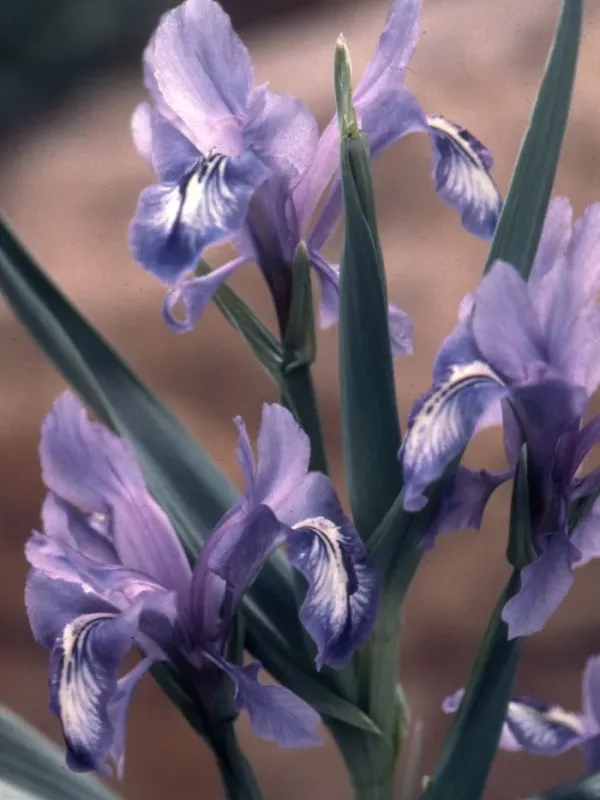
The primary use of Iris graeberiana is in ornamental gardening. It is highly valued for its early spring blooms, where large, pale blue or lavender flowers with a contrasting crest adorn rock gardens and alpine beds. Its compact size makes it an excellent choice for container planting and small decorative compositions.
Main diseases and pests
The main biological threat to Iris graeberiana is the development of fungal diseases affecting the root system, such as fusarium wilt and various types of rot. These conditions occur primarily due to poor moisture management and inadequate soil drainage, which quickly lead to the decay of the bulb.
Among pests, the greatest danger is posed by soil insects that damage the underground parts of the plant: wireworms and cutworm larvae. Additionally, bulbs can be infested by the bulb mite, which weakens the plant and promotes the development of secondary bacterial infections.
During the active growing season, the foliage of the irises can be attacked by thrips and aphids, which feed on plant sap and hinder the development of flower stalks. These pests are not only harmful in themselves but also act as vectors for viral diseases that affect the Iridaceae family.
To prevent losses, it is necessary to carry out regular preventive treatments with broad-spectrum fungicides. It is vital to ensure the quality of planting material and avoid overcrowding, as proper air circulation around the leaves significantly reduces the risk of disease outbreaks.
Upon detecting the first signs of rot, affected bulbs should be immediately removed from the soil along with the surrounding earth. The remaining plants in the bed should be treated with disinfectant solutions to stop the further spread of pathogens across the plantation area.