
Hesperantha coccinea
Hesperantha coccinea
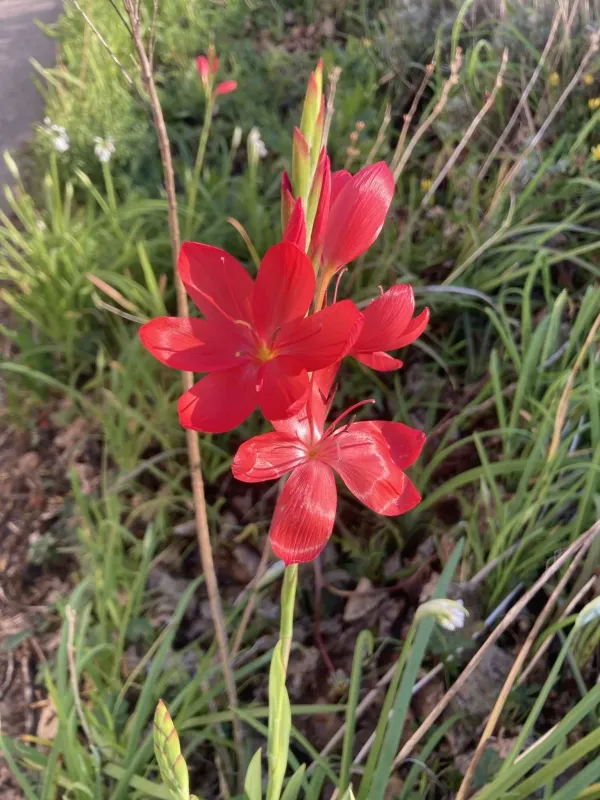
Description
Sowing dates
Planting Hesperantha coccinea is best performed in the spring, once the threat of frost has passed and the soil has warmed up sufficiently for active growth.
Rhizomes should be planted at a depth of about 5–8 centimeters, with a spacing of 15–20 centimeters to allow the plant to spread naturally over several seasons.
In cooler temperate climates, it is often advisable to plant these bulbs in containers, allowing for easy relocation to a greenhouse or frost-free shed during winter.
Spring is also the ideal time to divide established clumps, which helps to maintain the plant's vigor and prevents the center of the clump from becoming congested.
Soil preparation is critical; incorporating well-rotted organic matter and horticultural grit will ensure the necessary drainage and nutrient availability for the season.
Growing requirements
Native to South Africa, this member of the Iridaceae family thrives in moist, boggy environments and requires consistent moisture throughout its growing season.
The plant performs exceptionally well in full sun, although in very hot climates, partial shade during the hottest hours of the day can protect the foliage from scorching.
Soil should be rich in organic matter and possess excellent drainage properties, as while the plant loves water, it dislikes stagnating in waterlogged conditions.
Regular feeding with a balanced liquid fertilizer during the peak growing months will promote prolific flowering and maintain healthy foliage color.
- Consistent irrigation during dry spells.
- Mulching to retain soil humidity around the base.
- Regular division of plants every 3–4 years.
- Winter protection in frost-prone garden beds.
Main diseases and pests
Fungal diseases, specifically root rot, are the most significant threat to the health of the plant when it is grown in poorly draining or waterlogged soil.
Aphids can occasionally cluster on the flower stems; these can usually be managed with a strong spray of water or the application of insecticidal soap.
Slugs and snails are particularly attracted to the fresh, green shoots in the spring and can cause significant cosmetic damage if left unchecked.
In humid conditions, leaf spot diseases may appear, which can be mitigated by ensuring proper plant spacing and avoiding overhead watering late in the day.
Effective pest management involves maintaining overall garden hygiene and removing any decaying plant debris where common insects or pathogens might overwinter.