
Hairy gladiolus
Gladiolus hirsutus
Description
Growing requirements
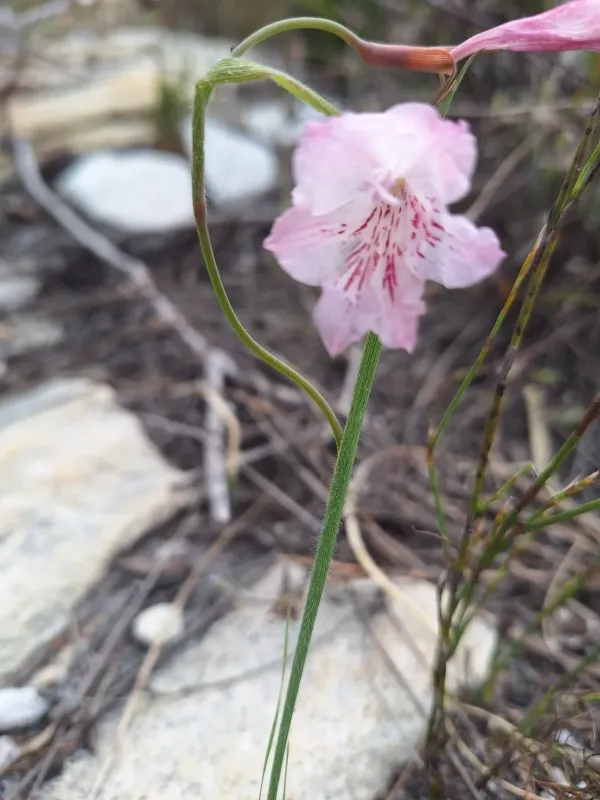
Hairy gladiolus (Gladiolus hirsutus) is a flowering perennial plant belonging to the Iridaceae family. Native to the Cape region of South Africa, it is known for its distinctive appearance and is appreciated in ornamental horticulture.
The plant thrives in well-draining, sandy or loamy soils. Good aeration is essential, as the corms are prone to fungal infections if subjected to waterlogged conditions, particularly during the dormant phase.
These plants require a sunny location to develop properly. In temperate climates, they are not frost-hardy, meaning that growers must store the corms in a cool, dry place during the winter to prevent freezing.
Optimal growth occurs during periods of moderate temperatures. Adequate moisture is necessary during the active growing season, but it is important to prevent water from accumulating on the hairy foliage to avoid moisture-related leaf damage.
The species is botanically defined by the fine hairs covering its stem and leaves. In a agricultural context, this plant is primarily utilized for aesthetic purposes, serving as an attractive addition to specialized flower beds and rock gardens.
Main diseases and pests
The main threats to Gladiolus hirsutus include fungal diseases such as Fusarium wilt and botrytis, which can devastate entire plantings if soil hygiene is neglected.
Thrips are the most significant insect pests, as they feed on the sap and can severely disfigure the flowers. Bulb mites may also attack the corms, especially when stored in improper conditions.
To maintain plant health, it is crucial to use certified disease-free corms and treat them with a systemic fungicide before planting in the spring.
Integrated pest management, including regular inspection and the use of targeted insecticides, helps to control thrips populations effectively throughout the summer.
Crop rotation is recommended to prevent the buildup of soil-borne pathogens in areas where Gladiolus hirsutus has been grown in previous seasons.