
Stinking iris
Iris foetidissima
Seeds of Iris foetidissima are best sown in autumn immediately after harvesting to ensure they undergo the necessary cold stratification period outdoors.
What the section contains
Stinking iris
If spring sowing is preferred, seeds must be artificially stratified in a cold environment for approximately two months to break dormancy and achieve uniform germination.
Place the seeds at a depth of 1-2 centimeters in well-draining soil, maintaining constant moisture until the seedlings have established a strong root system.
Vegetative propagation by rhizome division is highly effective and is best performed in late summer after the plant has finished its primary flowering cycle.
Growth during the first season is typically slow, requiring diligent weed control and consistent watering to ensure the young plants gain sufficient strength for winter.
The Stinking iris belongs to the Iridaceae family and is highly valued for its ability to thrive in shaded areas where many other flowering plants struggle to grow.
This species prefers fertile, calcareous soils, but it exhibits remarkable adaptability, performing well in various soil types provided there is adequate drainage.
Although the plant is shade-tolerant, it can also succeed in sunny locations, as long as it is protected from extreme desiccation during the peak of summer heat.
Essential cultivation practices include moderate irrigation and the prevention of waterlogging, which is critical to avoid root rot in these perennial plants.
Winter care is minimal in temperate regions; however, applying a layer of organic mulch around the base of the plant provides excellent insulation during harsh frost periods.
The primary pathological threat is heterosporium leaf spot, which manifests as brown lesions on the foliage, potentially reducing the plant's aesthetic quality.
Bacterial soft rot of the rhizome is a significant risk in poorly drained soils or areas with excessive humidity, necessitating prompt removal of infected tissues.
Insects like the iris fly can cause damage by laying eggs in the developing buds, while thrips may infest the leaves, requiring targeted insecticidal control.
Cultural practices such as spacing plants to ensure good airflow and keeping the area free of debris are highly effective in minimizing the risk of fungal infections.
Monitoring for signs of pest activity during the early spring growth phase allows for early intervention, ensuring the plants remain healthy and productive throughout the season.
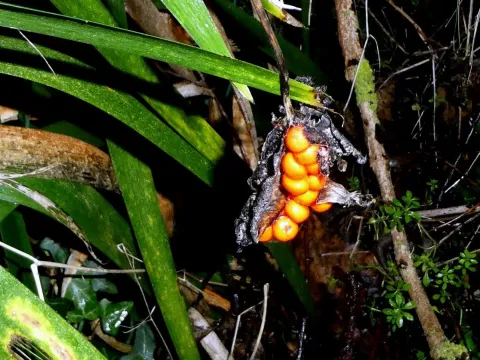
The primary harvest value of Iris foetidissima is its decorative appeal, specifically the brilliant orange seeds housed in pods that persist well into the winter months.
For dried flower arrangements, the seed pods should be harvested once they are fully mature and have naturally split open to reveal their vibrant colors.
Seed collection for propagation purposes must be performed before the pods drop their contents, ideally on a dry day to prevent fungal issues during subsequent storage.
While the leaves have a characteristic smell when crushed, the plant is harvested mostly for horticultural use rather than for industrial biomass or food production.
Routine maintenance includes removing dead foliage in early spring to encourage fresh growth, which keeps the plant tidy and supports long-term vigor in the landscape.