
Spring iris
Iris verna
Description
Growing requirements
Spring iris (Iris verna) is a charming herbaceous perennial member of the Iridaceae family. Native to the eastern United States, it thrives in woodland environments and naturally acidic, well-draining soils.
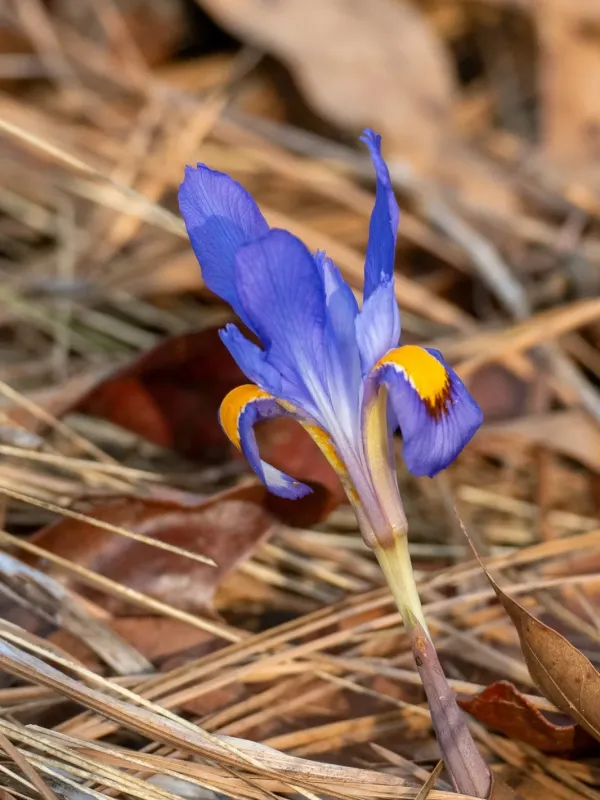
This species is characterized by its miniature habit, typically reaching heights of 3 to 6 inches. It features narrow, grass-like foliage and fragrant blue-violet blossoms adorned with a distinct golden-yellow signal on the falls, which signals the arrival of spring.
The cultural requirements for Iris verna emphasize the need for organic-rich, acidic soil that drains exceptionally well. Planting it in a location with filtered sunlight or light shade mimics its natural woodland habitat and prevents heat stress.
Water management is critical for this species. While it appreciates consistent moisture during the spring growth phase, it requires a drier dormant period to prevent crown rot. Mulching with pine needles can help maintain soil acidity and prevent root zone desiccation.
Propagation is primarily achieved by dividing the rhizomes in late summer after the plant has finished blooming. This ensures the plant establishes itself before the onset of colder weather, promoting vigorous growth in the following season.
Main diseases and pests
Bacterial soft rot is the primary threat to the Spring iris, often triggered by waterlogged soils or excessive winter moisture. If soft, mushy, and foul-smelling spots appear on the rhizomes, the affected areas must be removed surgically.
The iris borer is a common pest that can cause significant damage to the rhizomes by tunneling into them. Regular monitoring of the foliage for entry holes and larvae presence is essential for maintaining plant health.
Fungal leaf spot diseases may occur, especially during wet and humid spring conditions. These manifest as spots on the foliage that can prematurely reduce the plant's photosynthetic capacity if left untreated.
Maintaining proper air circulation around the plants is an effective non-chemical deterrent against many foliage diseases. Avoid overcrowding the plantings, as this encourages the rapid spread of spores between individual plants.
For pest management, applying horticultural soaps or specialized systemic insecticides during the early larval stage is most effective. Always prioritize cultural control methods before resorting to chemical interventions to protect beneficial garden pollinators.