
Susiana iris
Iris susiana
Description
Growing requirements
The Susiana iris (Iris susiana) belongs to the Iridaceae family and stands out as one of the most remarkable species within the oncocyclus section. Native to the arid regions of the Middle East, particularly Iran, it is highly valued for its striking, large blooms.
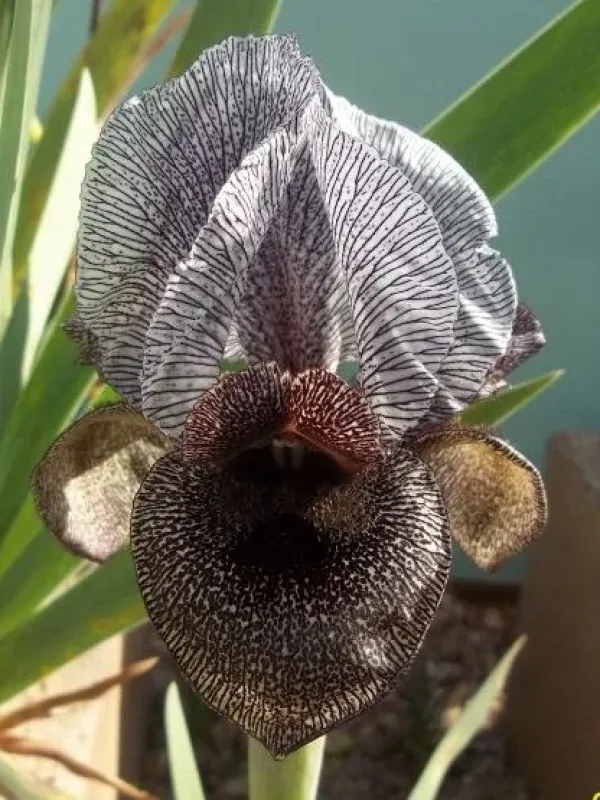
The plant features distinctively patterned flowers with dark, almost black veining on a paler background. Its foliage consists of gray-green, sword-shaped leaves forming a basal rosette, with flowering stalks typically reaching a height of 30 to 50 centimeters.
Cultivation requires strict adherence to environmental conditions: the plant thrives in full sun and demands excellent soil drainage. It prefers light, sandy, or well-draining soils with a neutral to slightly alkaline pH level.
Successful management involves a mandatory dormant period during the summer. In climates with humid summers, the rhizomes must be kept dry, often requiring growers to lift them or shield the soil from any moisture to prevent rot.
The primary use for Iris susiana is in professional and hobbyist ornamental gardening. It is frequently sought by collectors and hybridizers who value its unique genetic traits to develop new, visually complex iris cultivars.
Main diseases and pests
The most significant threat to the Susiana iris is the development of bacterial soft rot, primarily triggered by excessive soil moisture. Proper drainage and irrigation management are essential to ensure the longevity of the plant's rhizomes.
In terms of pests, the plant is susceptible to insects such as iris borers and thrips, which can damage leaves and roots. Preventive measures, including the application of fungicides and monitoring during the growing season, are highly recommended for maintenance.