
Sword lily
Gladiolus imbricatus
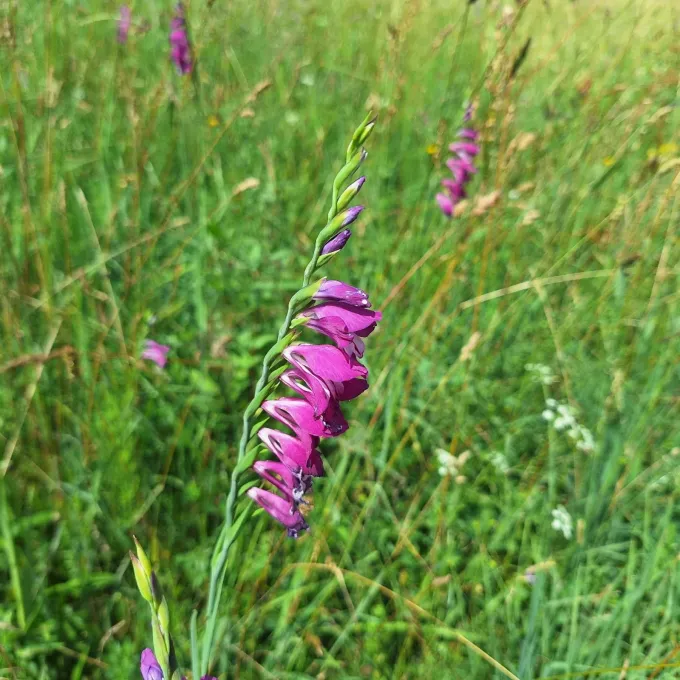
Description
Growing requirements
Gladiolus imbricatus, commonly known as the sword lily, belongs to the Iridaceae family. This perennial herb is native to temperate regions of Europe and Western Asia, typically inhabiting wetlands and moist meadows.
The plant features a corm system that stores nutrients, allowing it to survive periods of dormancy. It thrives best in fertile, well-draining soils that maintain consistent moisture levels throughout the growing season.
Regarding climate preferences, the species favors sunny locations with moderate temperatures. It is sensitive to prolonged droughts and extreme soil waterlogging, which necessitates careful site selection and soil preparation.
Standard agronomic practices include regular weeding to prevent nutrient competition and the application of fertilizers to support robust flower stalk development. Mulching can be used to preserve soil moisture during summer.
During autumn, corms should be managed according to local frost severity. In colder climates, digging up and storing the corms in a cool, dry place is standard procedure for ensuring plant survival until spring.
Main diseases and pests
The most significant pathological threats to Gladiolus imbricatus are fungal infections, particularly fusarium wilt and various forms of corm rot.
Insects like the gladiolus thrips constitute a major pest pressure, causing visible damage to the foliage and severely impacting the quality of the inflorescence.
Integrated pest management strategies involve the use of systemic insecticides and maintaining strict hygiene during the handling and storage of corms.
Crop rotation is essential to avoid the build-up of soil-borne pathogens, ensuring that the same plot is not used for bulbous crops for several consecutive years.
Regular monitoring of plants helps in early detection of symptoms, allowing for timely intervention with appropriate protective chemical or biological agents.