
Primulina dryas
Primulina dryas (Dunn) Mich. Möller & A. Weber
Description
Growing requirements
Primulina dryas is a distinctive perennial plant belonging to the Gesneriaceae family. Originating from the limestone cliff environments of Southern China, this species has become a favored subject for botanical collections and specialized indoor gardening due to its unique foliage and blooms.
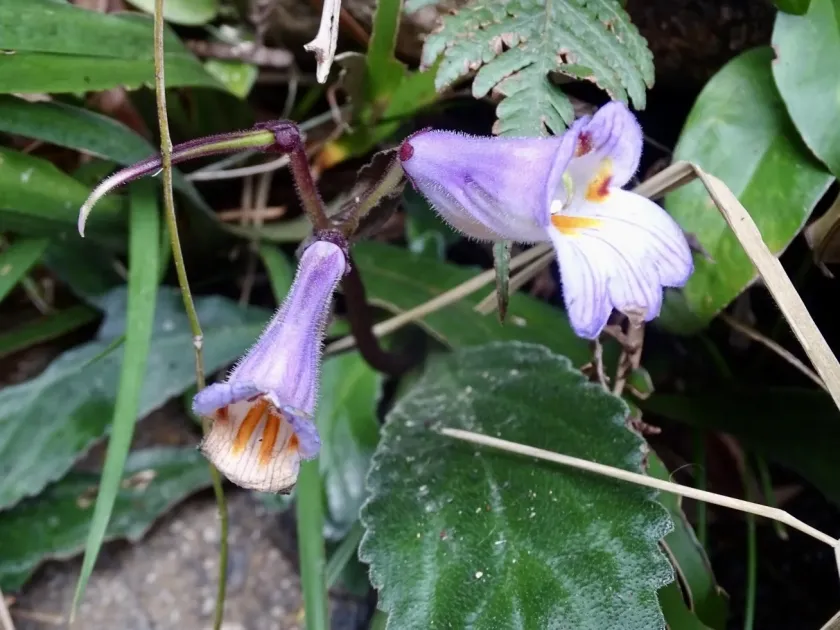
The plant exhibits a rosette growth habit with textured, hairy leaves that often feature intricate variegated patterns. Its flowers, typically borne on long peduncles, emerge in clusters and present a delicate, bell-shaped morphology that enhances the plant's aesthetic appeal in greenhouse settings.
Cultivation requires specific environmental parameters, most notably a moderate climate with temperatures ranging between 18°C and 24°C. The plant thrives in high humidity conditions, though it is imperative to maintain good air circulation to prevent stagnant air pockets that lead to physiological stress.
Soil requirements for Primulina dryas necessitate a porous and nutrient-rich medium. A standard mix should include peat, perlite, and a small amount of vermiculite to facilitate adequate root aeration and moisture retention while preventing compaction over time.
Agronomic maintenance centers on irrigation precision. Water should be applied directly to the soil surface, ensuring the crown remains dry. During the active growing season, light fertilization with a balanced liquid fertilizer diluted to half-strength is recommended every two weeks.
Main diseases and pests
The primary pathological threats include fungal infections such as Botrytis (gray mold), which targets leaves if ventilation is inadequate. Implementing a strict sanitation protocol by removing decayed plant matter and keeping the foliage dry is critical for disease management.
Common pests include aphids and mealybugs, which tend to congregate in the protected areas of the leaf axils. Integrated pest management strategies, such as mechanical removal or the application of horticultural oils, are effective when utilized early in the infestation cycle.