
Umbilicus heylandianus
Umbilicus heylandianus
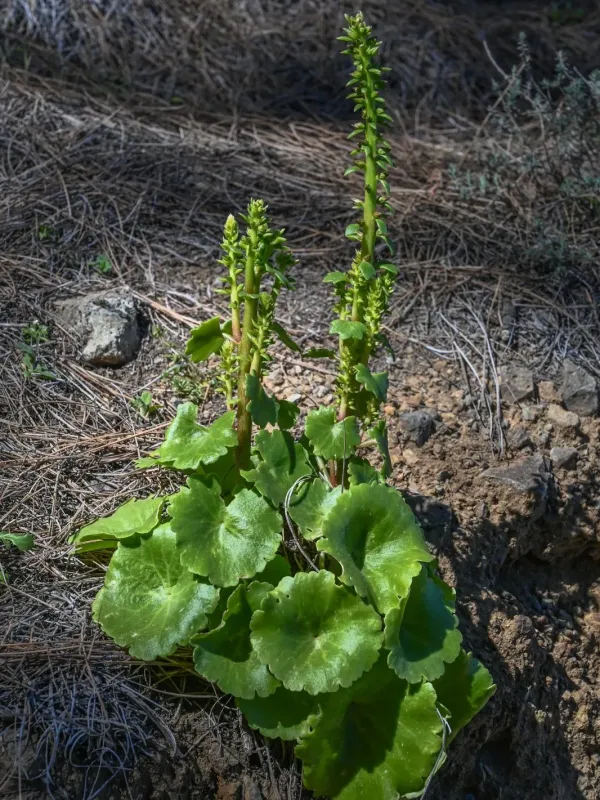
Description
Sowing dates
Umbilicus heylandianus is a perennial succulent plant belonging to the Crassulaceae family. In an agricultural or horticultural setting, this plant is treated as a specialized crop, requiring strict environmental control during the initial germination stages.
The seeds of this species are remarkably small, necessitating surface sowing without deep soil coverage. The optimal time for sowing is early spring in a greenhouse environment, which ensures a gradual increase in daylight hours for young seedlings.
Maintaining stable moisture levels in the substrate is crucial; growers must avoid both desiccation and waterlogging. Containers should be kept in well-lit areas, protected from direct, harsh sunlight to prevent scorching of the developing tissues.
In its natural habitat, reproduction occurs via seeds following seasonal rains. In cultivation, agronomists recommend sowing in seed trays with subsequent transplanting into individual pots to facilitate root development and reduce competition.
A high-quality substrate for succulents, enriched with perlite or coarse sand, is essential. The soil must have a neutral or slightly acidic pH, providing excellent drainage to prevent the root rot commonly associated with high-moisture environments.
Growing requirements
The plant demands bright, indirect light to maintain its characteristic compact morphology. Insufficient lighting leads to etiolation, where the shoots become weak and stretched, significantly lowering the market value of the crop.
An ideal temperature range for active growth is between +18 and +25 degrees Celsius. The plant is sensitive to drafts and sudden temperature fluctuations, making climate-controlled greenhouses the best environment for commercial production.
Soil requirements focus on aeration and rapid water drainage. Rocky, stony, or sandy soil mixes are preferred, mimicking the species' native rocky terrain. Minimal organic matter is needed, as the plant is adapted to nutrient-poor substrates.
Watering frequency should be moderate, allowing the top layer of the substrate to dry out between sessions. During the dormant winter season, irrigation should be strictly reduced to prevent the onset of fungal diseases.
The species is highly adapted to arid conditions, storing water within its succulent leaves. While it can withstand temporary drought, prolonged moisture stress can lead to stunted growth and reduced leaf turgor.
Yield
Yield for Umbilicus heylandianus is measured by the total biomass of succulent leaves and rosettes produced. As a slow-growing species, commercial cycles require patience and precise environmental management to ensure a uniform harvest.
Balanced micro-nutrient supplementation during the vegetative phase helps maximize biomass output. Excessive nitrogen fertilizers should be avoided, as they promote watery, fragile tissues that are highly susceptible to pests and diseases.
Economic use includes the plant's role in high-end landscaping, green roof construction, and as a niche product for ornamental plant nurseries. The pharmacological potential of its extracts remains an active area of research.
Implementing supplemental lighting during winter months can accelerate metabolic rates and increase annual biomass output. The final yield is heavily dependent on the grower's ability to maintain optimal climatic parameters year-round.
Vertical gardening applications offer a promising avenue for production, as the plant thrives in small, contained spaces. This efficiency makes it an attractive choice for modern urban agricultural projects.
Main diseases and pests
The most significant threat to the crop is excessive soil moisture, which leads to various root rot pathogens. Additionally, poor air circulation in greenhouses can encourage the development of powdery mildew on the leaf surfaces.
Primary pests include mealybugs and spider mites, which flourish in the dry, warm air of a greenhouse. Regular monitoring and the application of systemic insecticides are essential for controlling these common succulent pests.
Fungal diseases like Fusarium or Phytophthora require proactive fungicide treatment of the substrate at the time of planting. Maintaining hygiene protocols and sterilizing tools significantly reduce the risk of infection.
Aphids may target young, tender shoots, causing structural deformation. Early detection and manual removal, combined with localized treatments, are usually sufficient to manage minor infestations without mass chemical application.
Biological pest management, such as the introduction of beneficial predatory insects, is a highly effective, eco-friendly method for greenhouse cultivation, ensuring a safe and clean end product.
Harvesting
The harvest process involves precisely cutting mature rosettes or shoots using sterilized shears. It is best performed during periods of low humidity to ensure the cut surfaces heal properly and quickly.
Post-harvest handling requires immediate sorting and the removal of damaged leaves. The harvested material must be dried in the shade for several hours to allow a protective callus layer to form before final packaging.
For storage or long-distance transport, well-ventilated containers are necessary to protect the fragile foliage from mechanical damage. The temperature during storage should be maintained at a cool, stable +10 to +15 degrees Celsius.
Harvest frequency is determined by the plant's regeneration speed. With good agricultural practices, multiple harvests can be achieved within a single growing season without compromising the health of the parent plants.
Seed harvesting requires attention to detail; once the capsules turn a light brown color, they are ready for collection. Drying them in a warm, dry area ensures high germination rates for future planting cycles.