
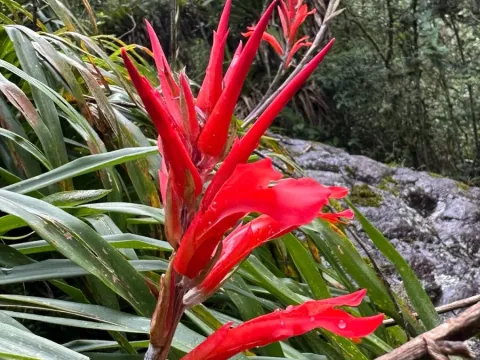
Pitcairnia
Pitcairnia L’Hérit.
Propagation of Pitcairnia in cultivation is most often carried out by vegetative means, specifically using side offshoots (pups) that form at the base of the parent plant.
What the section contains

Pitcairnia
The best time for separating and repotting the young offsets is during the spring season, when the plant emerges from its winter dormancy and begins active growth.
Seed propagation is less common as it requires strict adherence to temperature regimes and high humidity levels in greenhouse conditions.
Seeds are sown in a loose substrate based on peat and sand, not burying them deep but covering them lightly with substrate to ensure light access.
After the first true leaves emerge, the seedlings are transplanted into separate containers, providing them with a stable temperature of about 22–24 degrees Celsius.
Pitcairnia belongs to the Bromeliaceae family and is a typical tropical flora representative that requires diffused but bright lighting without direct sunlight.
The plant prefers moderate temperatures, which should range from 20–25 degrees Celsius in summer and should not fall below 15 degrees in winter.
The soil for the crop must be light, breathable, and slightly acidic, consisting of leaf mold, sod, shredded sphagnum moss, and charcoal.
Watering should be regular but moderate, using soft, settled water, while ensuring no moisture stagnation in the leaf rosette to prevent rot.
High air humidity is critical for the health of the plant, so regular leaf misting or the use of air humidifiers is highly recommended.
The most common pests for this crop are scale insects and spider mites, which usually infest the plant when the air is too dry.
Mealybugs can settle in the leaf axils, which is why regular visual inspection of the leaf blades and stems is necessary.
Root rot is the main threat when watering schedules are violated and when using overly dense, poorly drained substrate.
Leaf spot disease is often a consequence of fungal infections arising from poor room ventilation or sharp temperature fluctuations.
Systemic insecticides are used to control insects, while in cases of rot, total removal of damaged roots and repotting into fresh, disinfected soil is required.