
Quesnelia quesneliana
Quesnelia quesneliana
Description
Growing requirements
Quesnelia quesneliana is a member of the Bromeliaceae family, native to the tropical rainforests of Brazil. As an epiphyte, it naturally grows on tree trunks and rocky crevices, relying on organic debris and ambient humidity for its nutrients and hydration.
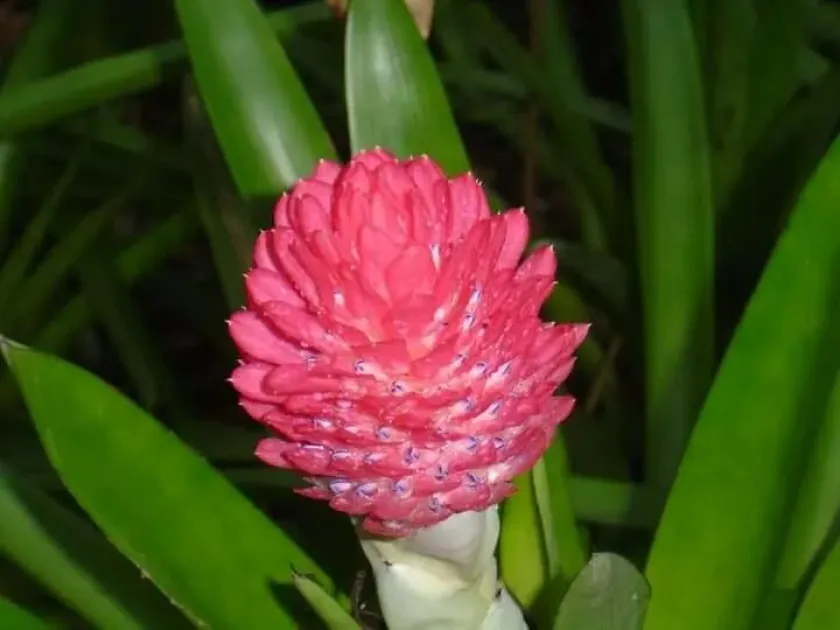
Botanically, the plant features a robust rosette of leathery, often spine-edged leaves. Its most striking feature is the inflorescence, characterized by vibrant bracts that protect the smaller, clustered flowers, creating a significant visual appeal.
For successful indoor or greenhouse cultivation, bright, indirect light is essential. The plant should be protected from harsh, direct sunlight, which can bleach the foliage and cause severe leaf burn, particularly if humidity levels are inadequate.
Maintaining a temperature range of 20°C to 25°C is ideal for growth. Quesnelia is sensitive to sudden drops in temperature and cold drafts, which can lead to plant shock and the development of rot, particularly in the crown of the rosette.
A well-draining substrate is mandatory, preferably a mix designed for orchids or epiphytic bromeliads, consisting of pine bark, perlite, and peat moss. This ensures that the roots receive sufficient oxygen while retaining enough moisture to support the plant.
Main diseases and pests
Overwatering is the primary cause of decline in this species, as stagnant water at the roots quickly leads to root rot. It is critical to ensure that the potting medium remains moist but never waterlogged to prevent fungal infections.
Scale insects and mealybugs are the most common pests found on Quesnelia. They often cluster in the tight leaf axils, making them difficult to detect. Early detection through regular inspection is vital for effective management.
Spider mites can become a nuisance in dry environments, specifically during winter months. Maintaining high air humidity through misting or using a humidifier can discourage these pests and promote healthier leaf development.
Fungal leaf spot diseases may occur if air circulation is poor or if the foliage remains wet for extended periods. Promoting good airflow around the plant helps keep the leaves dry and prevents the spread of pathogens.
Cultural hygiene, including the removal of dead leaves and debris from the rosette, is an essential practice. Keeping the plant free from decaying matter minimizes the habitat available for pests and fungi to thrive.