
Quesnelia arvensis
Quesnelia arvensis
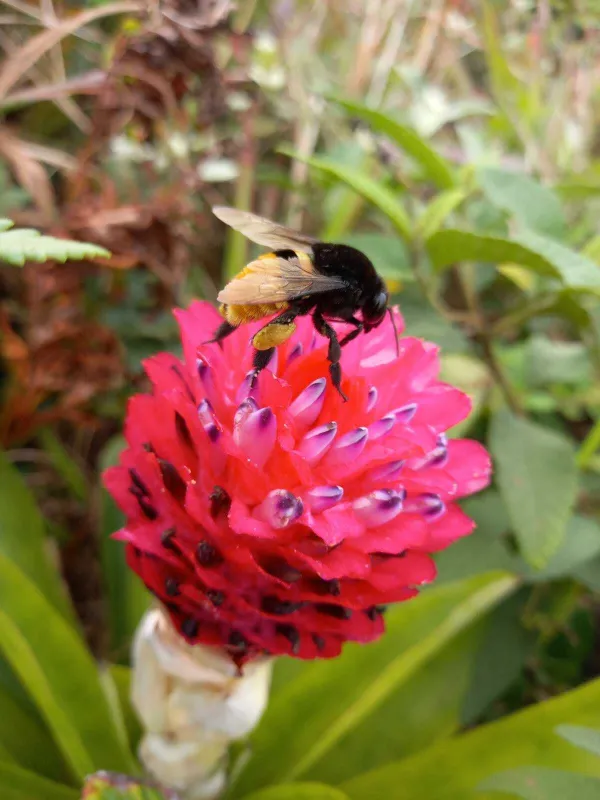
Description
Growing requirements
Quesnelia arvensis is a perennial plant belonging to the Bromeliaceae family. It is recognized for its unique adaptation to tropical forest environments, typically found in the coastal regions of Brazil, where it thrives as an epiphyte in humid conditions.
The botanical architecture of the plant is centered around its basal rosette, which acts as a specialized water-storage organ. This feature is essential for survival in its native habitat, allowing the plant to collect rainwater and nutrients directly from the canopy debris.
Cultivation of this species requires strict environmental control, particularly regarding aeration. The substrate must be highly porous, consisting of coarse bark, charcoal, and organic peat to prevent root rot, which is a common issue in poorly drained media.
The plant demonstrates optimal growth in environments with consistent temperatures, ideally ranging between 20°C and 26°C. Maintaining these thermal conditions is crucial for the metabolic processes that support the production of the plant's characteristic inflorescences.
Lighting requirements are specific, favoring filtered sunlight to mimic the light conditions of the forest understory. Insufficient light levels will lead to etiolation and weak tissue development, while excessive exposure can permanently damage the foliage structure.