
Quesnelia lateralis
Quesnelia lateralis
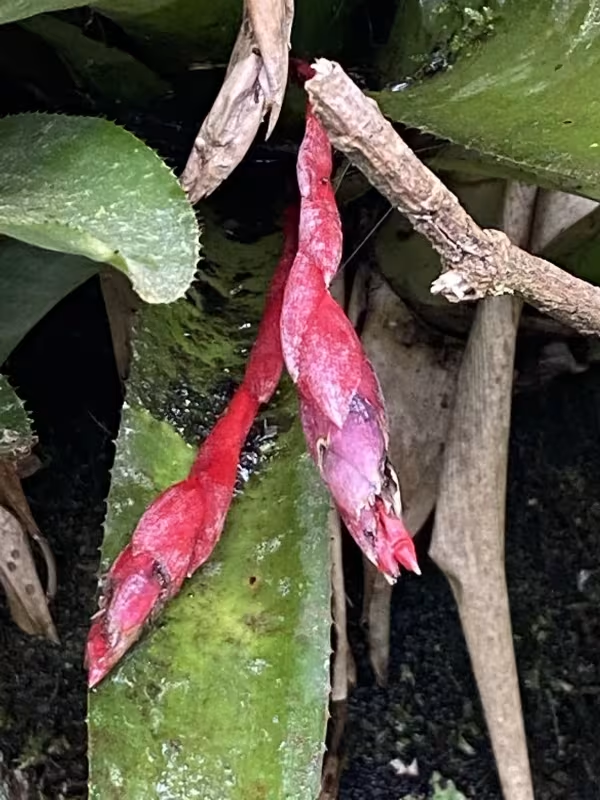
Description
Growing requirements
Quesnelia lateralis is a striking ornamental plant species belonging to the Bromeliad (Bromeliaceae) family. Native to the Atlantic Forest regions of Brazil, it thrives in warm, humid habitats where it grows as an epiphyte or sometimes a terrestrial plant.
The plant is characterized by a basal rosette of stiff, spiny leaves. The most distinct feature of Quesnelia lateralis is its lateral inflorescence, which emerges from the side of the rosette rather than from the central axis, distinguishing it from many other bromeliads.
Regarding climate, this species requires high humidity levels and constant temperatures between 20°C and 25°C. It is intolerant of cold drafts and requires a well-ventilated environment to prevent fungal issues within its water-holding rosette.
The soil requirements focus on excellent drainage and aeration. A mix consisting of orchid bark, perlite, and a small amount of peat moss is ideal to support its epiphytic roots, which do not tolerate being waterlogged or buried in heavy garden soil.
Light management is crucial for the coloration of the foliage and flowering. Bright, filtered light is preferred to simulate the dappled sunlight of a rainforest canopy, while excessive darkness will lead to etiolated and weakened growth.
Main diseases and pests
Scale insects are among the most persistent pests for Quesnelia lateralis. These small insects adhere to the leaves and consume nutrients, leading to stunted growth and yellowing of the foliage, which necessitates careful removal with insecticidal soap.
Mealybugs, identified by their white, powdery appearance, often colonize the leaf axils. If left untreated, they can cause significant damage to the heart of the plant, which is the most sensitive growing point of the bromeliad.
Root rot, resulting from overwatering or poor-quality substrate, is a frequent threat. If the roots remain saturated for too long, they lose the ability to transport oxygen, leading to the rapid decay of the entire rosette structure.
Fungal leaf spot diseases may appear during periods of high moisture combined with poor airflow. These spots detract from the aesthetic value of the plant and can lead to necrosis if the pathogen spreads to the central stem.
Effective management includes maintaining a dry crown during cooler periods, ensuring optimal ventilation, and using systemic insecticides preventatively if an infestation is detected early in the plant's development cycle.