
Neoregelia carchorodon
Neoregelia carchorodon
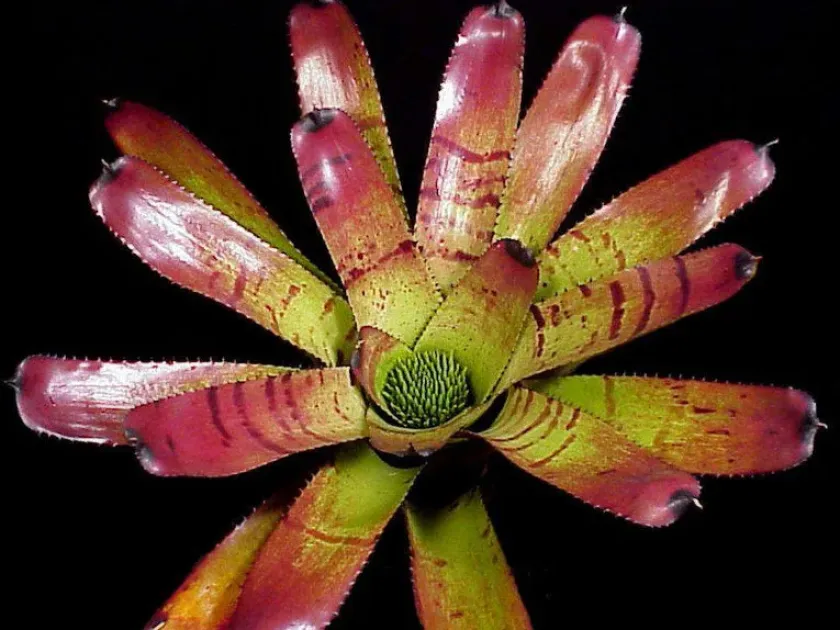
Description
Growing requirements
Neoregelia carchorodon is a member of the Bromeliaceae family, originating from the tropical rainforests of Eastern Brazil. It is highly regarded in horticulture for its robust, spiny-edged leaves and large, striking rosette, making it a prominent feature in exotic plant collections.
The plant thrives in a bright, filtered light environment. Direct sunlight can scorch the foliage, while insufficient light leads to a loss of the vibrant leaf patterns and coloration typical of this species. It is essential to replicate its natural forest canopy habitat.
Temperature requirements are strictly tropical, necessitating a range of 20°C to 28°C. The plant must be protected from temperatures dropping below 15°C, as cold exposure can cause irreparable damage to the water-holding leaf base and general metabolism.
Soil requirements focus on high drainage and aeration. A substrate consisting of orchid bark, perlite, and coarse peat moss is recommended. As an epiphyte, the plant derives most of its moisture and nutrients through the central tank formed by its leaves rather than the root system.
Care practices include filling the central leaf cup with soft, clean water, which should be changed periodically to prevent bacterial buildup. The surrounding air humidity must be consistently high to ensure the health of the leaf surfaces and prevent dehydration.
Main diseases and pests
The primary threats to Neoregelia carchorodon are associated with improper water management. Water stagnation in the rosette combined with poor ventilation frequently leads to crown rot, a condition that can be rapidly fatal for the plant.
Pest management should focus on scale insects and mealybugs, which tend to congregate in the tight crevices of the leaf bases. Because these areas are difficult to reach, frequent inspection and careful application of systemic pesticides are necessary for effective control.
Spider mites represent a significant risk in low-humidity environments. They cause stippling and discolouration of the foliage, eventually leading to reduced vigor and stunted growth. Increasing humidity and misting are the most effective preventive measures against these pests.
Fungal pathogens may proliferate if the plant remains wet for extended periods in cool conditions. Proactive management involves ensuring good air circulation around the plants and isolating any specimens showing signs of infection to prevent the spread of spores.
To maintain plant health, it is vital to avoid over-fertilization, as high mineral content can burn the sensitive tissue of the water-absorbing leaves. Use a diluted, balanced fertilizer specifically formulated for epiphytic plants during the active growing season only.