
Neoregelia
Neoregelia hybrids
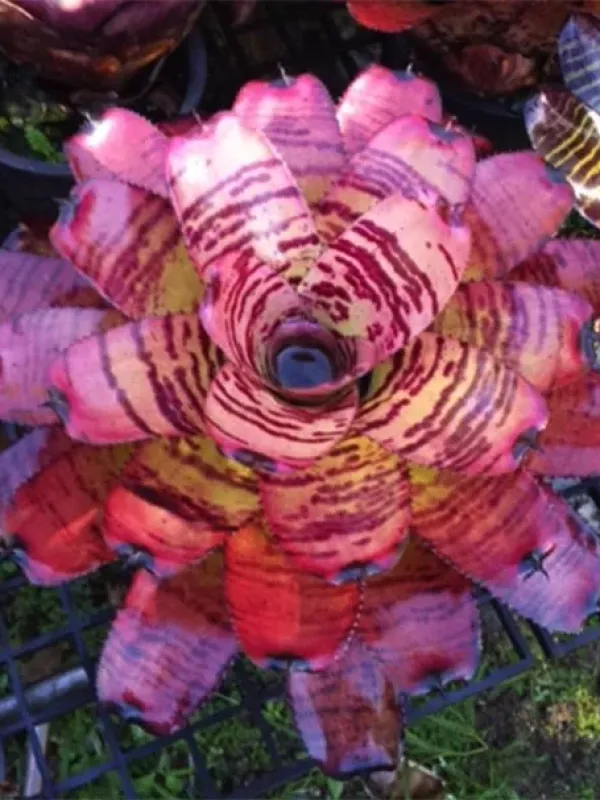
Description
Growing requirements
Neoregelia (Neoregelia hybrids) belongs to the Bromeliaceae family, representing a group of tropical epiphytic plants native to the rainforests of South America, particularly Brazil. These plants are uniquely adapted to grow on trees, using their roots primarily for anchorage rather than nutrient uptake.
Successful cultivation requires bright, filtered light to maintain the vibrant coloration of the foliage. These plants thrive in temperatures between 20°C and 25°C. Exposure to direct midday sun can result in leaf scorching, while temperatures falling below 15°C may lead to physiological stress and growth cessation.
The potting medium must be exceptionally porous and well-draining. A typical agricultural mix consists of orchid bark, perlite, peat moss, and charcoal. This composition ensures proper aeration of the root zone, which is vital for preventing oxygen deprivation and subsequent decline of the plant specimen.
Watering techniques for Neoregelia differ from terrestrial plants. Water should be applied directly into the central cup, which serves as a reservoir. It is essential to flush the cup periodically to prevent mineral buildup and bacterial growth. The soil should be kept barely moist to ensure the plant maintains its structural integrity.
In terms of commercial utility, Neoregelia is highly regarded in the indoor plant industry and terrarium design. Its longevity and aesthetic appeal during the flowering stage make it a staple in tropical plant production. Breeders focus on creating hybrids with diverse leaf patterns and intense bract colors for ornamental use.
Main diseases and pests
Scale insects, mealybugs, and spider mites are the most significant pests affecting these bromeliads. These pests often congregate in the leaf axils, making them difficult to detect. Regular inspection and horticultural oil treatments are recommended for integrated pest management.
Fungal rots, such as Phytophthora, occur frequently when the substrate remains waterlogged or when air circulation is poor. To mitigate these threats, growers must emphasize hygiene by using sterile potting components and ensuring rapid drying of the surface after irrigation.