
Nidularium correia-araujoi
Nidularium correia-araujoi
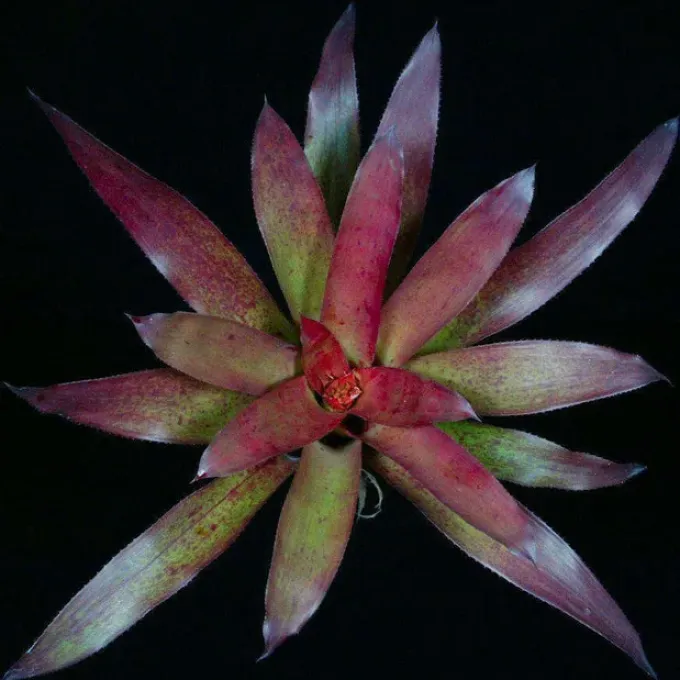
Description
Growing requirements
Nidularium correia-araujoi is an attractive perennial herbaceous plant belonging to the Bromeliaceae family. Native to the tropical rainforests of Brazil, this species typically adopts an epiphytic lifestyle, growing on tree branches or as a terrestrial plant within the forest floor understory.
The culture requires tropical conditions with temperatures consistently maintained between 20 and 25 degrees Celsius. Humidity levels should remain high, ideally between 70 and 85 percent, to replicate the natural habitat and promote healthy leaf development and flowering.
The growing medium must be highly porous and well-draining to prevent root rot. A mix consisting of pine bark, peat moss, charcoal, and perlite is ideal for cultivation, ensuring adequate aeration for the sensitive root system of the bromeliad.
Bright, filtered light is essential for this species. In greenhouse environments, plants should be placed in areas protected from direct sun exposure, which can cause leaf scorch and discoloration, while maintaining good airflow around the foliage to prevent fungal growth.
Watering is unique for this genus; water should be poured directly into the central tank formed by the rosette of leaves. It is crucial to ensure that the water is soft, at room temperature, and frequently replaced to avoid bacterial buildup within the reservoir.
Main diseases and pests
Common pests affecting this species in cultivation include mealybugs and scale insects. These pests often congregate in the tightly packed bases of the leaves, making early detection and targeted application of suitable systemic insecticides necessary for control.
Spider mites can become a significant problem in environments with low humidity levels. Regular misting of the plants and maintaining high ambient humidity are the best preventative measures against these tiny but damaging arachnids.
Root rot is the most common physiological disorder, usually resulting from poor drainage or excessive watering when ambient temperatures are low. If the substrate remains waterlogged, the roots will quickly deteriorate and cease functioning.
Fungal infections, which manifest as dark spots on the foliage, typically occur when air circulation is insufficient. Ensuring that the plants are spaced adequately and that the greenhouse is ventilated prevents the onset of these pathogens.
To ensure long-term health, growers must regularly inspect the plant for debris or dead leaf tissue within the rosette. Removing such waste prevents the accumulation of decaying matter, which often attracts insects and encourages rot.